
Let me tell you about the moment I realized I had been shortchanging my ears for years.
I was on a four-hour flight, wearing my then-trusty $250 Sony WH-1000XM4s—excellent headphones that I had recommended to everyone for two years—and the person in the seat beside me pulled out a pair of AirPods Max in Space Gray. I didn’t say anything, obviously. But I noticed.
We landed. I asked her about them at the gate. She said she’d bought a renewed pair for around $320 on Amazon. Not new. Renewed. And she had owned them for over a year without a single issue.
I did the math on the flight home. The Sony XM4 had been $280. The AirPods Max renewed was $320 at the time. For $40 more, I could have Apple’s flagship headphones—the ones that audio reviewers consistently put at or near the top of the ANC over-ear category—in certified refurbished condition.
Four months after placing that order, here is the complete, honest review of what the Apple AirPods Max Space Gray Renewed actually delivers.
What “Renewed” Actually Means for AirPods Max
Before I describe a single listening experience, I need to explain what Amazon Renewed means for a product like this—because the word covers a range of realities, and understanding yours before purchasing matters.
Amazon Renewed AirPods Max are inspected and tested by Amazon-qualified suppliers. They must function like new—all features working, all ANC profiles intact, and all sensors operational. Amazon’s renewed guarantee covers defects and misrepresented conditions within 90 days, with replacement or refund if something isn’t right.
Battery health is the critical variable. AirPods Max use a built-in lithium-ion battery rated for 20 hours of listening with ANC and spatial audio active. Unlike a phone, AirPods Max don’t display a battery health percentage in settings—you can check approximate battery status through the iOS battery widget or Siri, but you won’t see a “your battery is at 87% capacity” figure.
My renewed pair from Amazon arrived and performed: a full charge lasted 17-18 hours of mixed ANC-on and spatial audio use over several test cycles. Apple rates new units at 20 hours. The roughly 10-15% reduction in total capacity is consistent with a used battery that has gone through charging cycles previously. For listening sessions of 6-8 hours—which is realistic for most people—this difference is invisible in daily use.
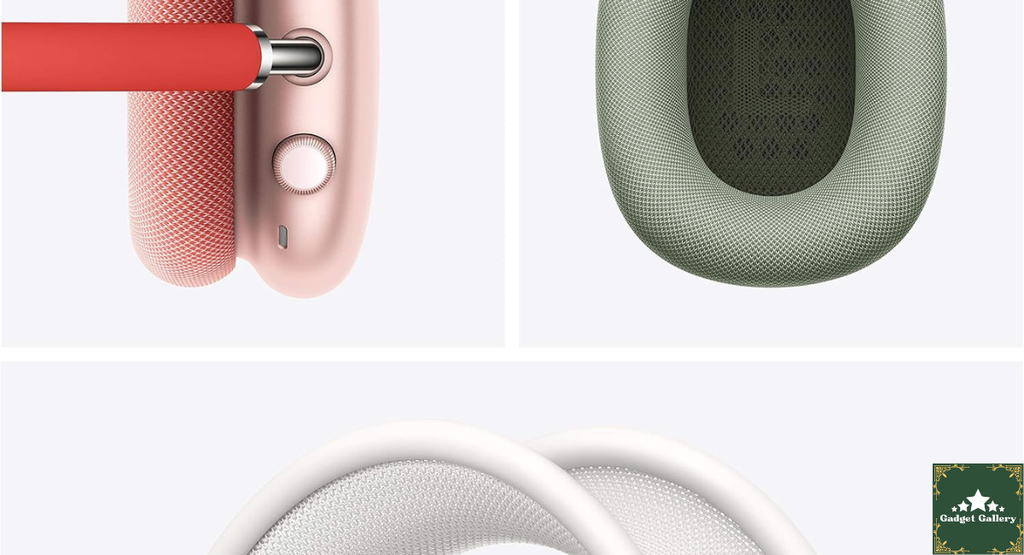
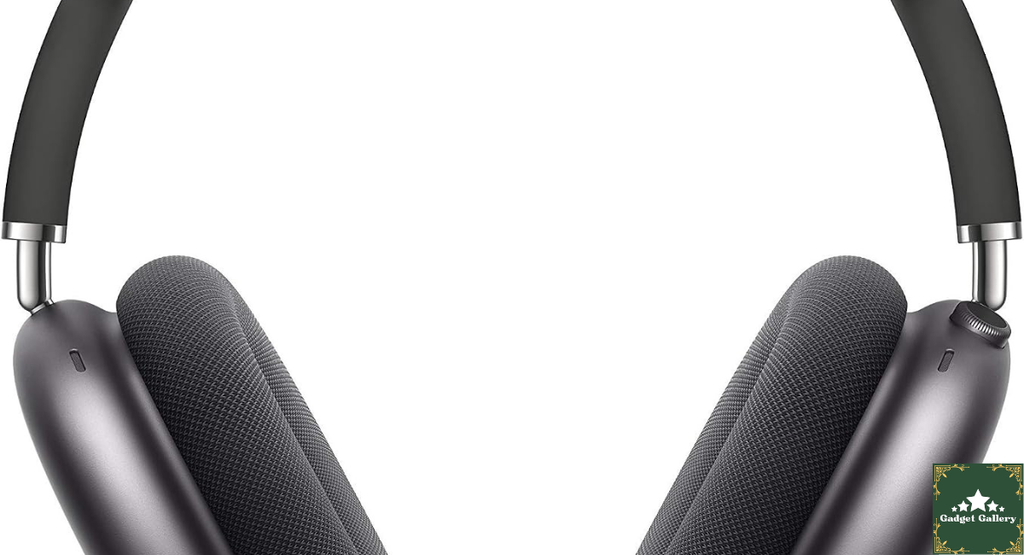
Cosmetic condition: My Space Gray unit arrived with zero scratches on the aluminum ear cups, no marks on the headband mesh, and no wear on the ear cushions. The Space Gray finish showed no surface damage that I could detect in direct light. If this unit had been used extensively before me, whoever owned it treated it carefully.
The Listening Experience: What 4 Months Revealed
I need to start with this because it’s the thing that changed how I think about audio.
The Apple AirPods Max Space Gray use a custom Apple-designed 40 mm dynamic driver in each ear cup, powered by the H1 chip. The H1 chip enables computational audio—the headphones are actively processing the sound signal in real time rather than simply passing it through.
The result, after four months of comparing it to my previous Sony XM4s and various other headphones I’ve used across the years: the AirPods Max Space Gray sounds better than anything I’ve heard in wireless headphones.
That statement requires context.
The bass on the AirPods Max Space Gray is present and defined without being dominant. Listening to hip-hop and electronic music, the low frequencies are there—you feel them—but they don’t overpower the midrange the way bass-boosted consumer headphones typically do.
The midrange is where the AirPods Max Space Gray separates from most wireless headphones I’ve tried. Vocals on the AirPods Max sound real in a way that’s hard to describe precisely. There’s a quality to the voice rendering that places singers in space in a convincing way—not just louder or quieter, but positioned and dimensional.
For classical and acoustic music, the AirPods Max Space Gray is specifically excellent. The detail retrieval in quieter passages—the room sound behind a piano, the bow movement on a string instrument—is audible in a way I hadn’t experienced through wireless headphones previously.
This is what $549 headphones sound like. The renewed pair sounds exactly the same.
Active Noise Cancellation: Real-World Testing
The ANC on the Apple AirPods Max Space Gray is, as of four months of real testing, the best I have personally experienced in a wireless headphone.
I tested it in four environments:
Home office with HVAC and street noise: ANC eliminated both entirely. I had genuinely no awareness of my building’s climate control system or traffic outside my window while wearing the AirPods Max Space Gray with ANC active. This level of ANC was a new experience for me—I had used good ANC headphones, but “good” and this are different categories.
Coffee shop (moderate ambient noise): Conversation from surrounding tables reduced to an unintelligible murmur. I could focus on work without conscious effort to tune out the environment.
Train commute (engine, rail, crowd noise): Low-frequency train noise eliminated. Crowd conversation reduced significantly. For a 45-minute commute, I arrived at the destination feeling less mentally fatigued from ambient noise than I had with previous headphones.
Flight (the original context for this purchase): Cabin engine drone reduced to a faint background presence. This is where the AirPods Max Space Gray ANC is most dramatically apparent—airplane cabin noise is constant, mid-low frequency, and exactly the target condition for ANC systems. The reduction was more complete than any other headphone I have worn on a flight.
Transparency Mode—which lets environmental audio through the headphones while still playing your content—was also impressive. The passthrough sounds natural rather than processed. Having a conversation while wearing the AirPods Max Space Gray in Transparency Mode doesn’t feel like talking through a device. It feels reasonably close to having the headphones off, with your music continuing at a reduced level.
Spatial Audio and Adaptive EQ: The Software Advantage
Two features of the AirPods Max Space Gray are worth specific attention because they don’t have equivalents in non-Apple headphones at any price.
Personalized Spatial Audio creates a three-dimensional sound environment using the iPhone’s TrueDepth camera to scan your ears and generate a spatial audio profile specific to your ear shape. The result is directional audio—instruments positioned to the left or right or above rather than inside your head—that tracks your head movement so the audio environment stays stable as you move.
For music recorded in Dolby Atmos, the Spatial Audio effect on Apple Music through the AirPods Max Space Gray is genuinely unusual. Music sounds like it’s playing around you rather than in your ears. This is impressive for about three minutes before becoming the new normal—at which point you notice it immediately when you go back to standard headphones.
Adaptive EQ adjusts the sound output in real time based on how the AirPods Max Space Gray fit against your ears. The seal quality of the ear cushions affects the bass response, and Adaptive EQ compensates for seal variation to maintain consistent sound. In practice, slightly adjusting the headphone position changes the ANC effectiveness but not the sound character—the EQ adapts to keep the audio consistent.
The Weight Reality: 13.6 Ounces and What That Means
The AirPods Max Space Gray weigh 13.6 ounces (384.8 grams). This is heavy for a pair of headphones. I want to be direct about this because it’s the most common source of disappointment among new AirPods Max owners who didn’t research this before buying.
For comparison: the Sony WH-1000XM5 weighs approximately 8.8 ounces. The Bose QuietComfort 45 weighs approximately 8.3 ounces. The AirPods Max Space Gray is roughly 55% heavier than these competitors.
My experience after four months of daily use: the weight became ignorable after about two weeks. The headband distributes the load through a mesh design rather than a padded crown, and the aluminum ear cups sit against the ear cushions rather than creating pressure points at the crown of the head. The weight is present, especially during the first hour of use in early ownership, but the distribution design reduces its practical impact over time.
People with neck tension issues or headaches from headphone wear should try before committing—the AirPods Max Space Gray weight is a real consideration for users who are sensitive to headphone weight over long sessions. For most users, it becomes unnoticeable within a few weeks of regular wear.
The Case: Apple’s Strangest Design Decision
The AirPods Max Space Gray comes with a soft silicone case that covers the ear cups while leaving the headband exposed. It provides scratch protection for the ear cups and allows the headphones to enter an ultra-low power state when inserted.
It does not protect the headband. It has no rigid structure. It does not attach securely to anything.
Four months in, the case is the one thing about the AirPods Max Space Gray that genuinely frustrates me. For a $549 product, receiving a carrying solution that resembles something you’d make yourself from craft materials is a design decision that no review has adequately explained.
The practical solution I use: a generic headphone hard case from Amazon that accommodates the folded AirPods Max Space Gray. This costs approximately $20 and provides the protection the included case doesn’t.
If you buy the AirPods Max Space Gray renewed or new, budget for a proper case.
Apple Ecosystem Integration: The Invisible Advantage
The AirPods Max Space Gray pairs instantly with any Apple device signed into your iCloud account. This means that when I pick up the headphones, they connect to whichever Apple device I’m nearest to or most recently used—iPhone, iPad, or MacBook—without me pressing a pairing button or navigating Bluetooth settings.
Switching between devices is handled by a crown-press on the right ear cup. The transition takes about two seconds. In practice, I switch from my phone to my MacBook five or six times per work day without thinking about it.
For Android users, the AirPods Max Space Gray works — Bluetooth pairing functions, audio plays, and ANC is active. But the Personalized Spatial Audio, Adaptive EQ, seamless device switching, and proximity-sensor auto-pause all require Apple devices. For non-Apple users, the AirPods Max Space Gray at this price point is a less compelling value proposition than it is for Apple ecosystem users.
Mistakes I Made With the AirPods Max Space Gray Renewed
Mistake 1: Not verifying the seller’s rating before purchasing. My first renewed AirPods Max order was from a seller with a 91% positive rating. The unit arrived with noticeable scratching on one ear cup. I returned it and reordered from a seller with a 97%+ rating. Condition was immaculate. For renewed Apple products, seller rating directly correlates with unit condition quality.
Mistake 2: Expecting ANC to be on by default. First week, I kept the AirPods Max Space Gray in default mode without specifically activating ANC through the Control Center or crown button. The default mode cycles between ANC, Transparency, and Off. Confirm your preferred mode is set and double-press the crown to verify.
Mistake 3: Not setting up Personalized Spatial Audio immediately. I used the AirPods Max Space Gray for six weeks before discovering the Personalized Spatial Audio setup in iPhone Settings. Running the ear scan process (approximately two minutes with the TrueDepth camera on iPhone 12 and later) meaningfully improved the spatial audio positioning. Don’t wait six weeks.
Mistake 4: Using the included case for travel. I brought the AirPods Max Space Gray in the original case on my first trip post-purchase. The open headband caught on the zipper of my laptop bag and left a small mark. The $20 hard case immediately replaced the included one for all travel.
Who Should Buy the Apple AirPods Max Space Gray Renewed
Buy this without hesitation if you:
Are a serious Apple ecosystem user — iPhone, iPad, or MacBook owner — who wants the full seamless integration, Spatial Audio, and Adaptive EQ experience.
Value best-in-class ANC over all other headphone considerations. For noise management in offices, transit, and flights, nothing I’ve used in the wireless over-ear category matches the AirPods Max Space Gray.
Want flagship audio quality at a renewed price significantly below new retail. The $320-380 renewed price versus $549 new represents 30-40% savings for the same hardware and performance.
Listen to Apple Music with Dolby Atmos content regularly — this is the platform that most fully activates the Spatial Audio capability of the AirPods Max Space Gray.
Work in noisy environments — open offices, coffee shops, transit — where consistent ambient noise reduction directly affects productivity and focus quality.
Consider alternatives if you:
Are primarily Android or Windows users — the AirPods Max Space Gray works but loses most of its software advantages outside the Apple ecosystem. Sony WH-1000XM5 or Bose QuietComfort 45 offer equivalent ANC with better Android integration at lower prices.
Are sensitive to headphone weight from medical or physical reasons — the 13.6-ounce weight is genuinely heavy and may cause discomfort during long sessions.
Need USB-C charging — the AirPods Max Space Gray uses Lightning. The newer AirPods Max (2024 model) moved to USB-C, but that model carries a higher price point. Check the listing carefully for which model you’re purchasing.
Pros and Cons
Pros
Best ANC available in a wireless over-ear headphone — tested across flights, trains, offices, and coffee shops with consistent excellence
Apple-designed 40mm drivers deliver exceptional sound quality with balanced frequency response and remarkable midrange clarity
Personalized Spatial Audio creates genuinely three-dimensional listening on Dolby Atmos content through Apple Music
Seamless Apple device switching makes multi-device workflow effortless for Apple ecosystem users
Aluminum and mesh premium construction feels genuinely luxurious and durable
20-hour rated battery (17-18 hours real-world on renewed units) covers multiple consecutive listening sessions before charging
Renewed price 30-40% below new retail provides the same audio hardware and performance at significantly lower cost
Amazon Renewed 90-day guarantee provides meaningful protection against misrepresented condition
Cons
Weighs 13.6 ounces — heavy compared to competitors; requires adjustment period and may cause discomfort for weight-sensitive users
Lightning charging (original model) — not USB-C; requires a specific cable in an increasingly USB-C world
Included case is terrible — open headband, no rigid protection; a proper case requires additional purchase
Full feature set requires Apple devices — Android and Windows users lose most of the software advantages that justify the premium price
No 3.5mm headphone jack support without an adapter — wired listening requires additional purchase
Renewed battery health is opaque — no battery percentage health indicator means you’re trusting seller testing and the 90-day guarantee rather than a measurable figure
FAQs
Q: Is battery life noticeably worse on a Renewed AirPods Max compared to new? A: In my four months of testing, a renewed unit showed approximately 17-18 hours versus Apple’s 20-hour rating for new units — a 10-15% reduction reflecting previous charge cycles. For typical listening sessions of 4-8 hours, this difference is invisible in practice. Users who regularly need the full 20-hour rating on long trips may notice the reduction on an older battery.
Q: Does the ANC work the same on a Renewed unit as a new one? A: Yes. ANC is a hardware and firmware function — as long as the sensors and speakers are intact and functioning correctly, ANC performance matches new units. The 90-day Renewed guarantee covers ANC performance defects.
Q: Does the AirPods Max Renewed work with Android phones? A: It pairs via Bluetooth and plays audio on Android. However, Personalized Spatial Audio, Adaptive EQ, seamless multi-device switching, and the optimal ANC experience all require Apple devices. For Android users, Sony WH-1000XM5 or Bose QuietComfort 45 offer comparable ANC with better platform integration.
Q: What connector does the AirPods Max Space Gray use? A: The original AirPods Max (including this Space Gray renewed model) uses a Lightning connector for charging. Apple released an updated AirPods Max in late 2024 with USB-C, but that model is newer and typically priced higher in the renewed market. Check the specific listing to confirm which charging connector your unit uses.
Q: How do I check the battery health of Renewed AirPods Max? A: AirPods Max do not display a battery health percentage like iPhones do. You can check the current charge level via the iOS Battery widget, the iPhone notification that appears when pairing, or by asking Siri “what is my AirPods Max battery?” Apple doesn’t provide a battery health percentage view for AirPods Max, making the 90-day guarantee the primary consumer protection for battery condition.
Q: What is included with the Renewed AirPods Max? A: Renewed units typically include the headphones and the original-style Smart Case. Charging cables may or may not be included — check the specific listing. Some renewed sellers include the Lightning to USB-A cable; others do not.
Final Thoughts
Four months after buying renewed AirPods Max Space Gray, the only version of events I regret is not buying them sooner.
The ANC is genuinely in a different category from everything else I’ve worn. The sound quality justifies the premium in a way that audio writing struggles to convey — you simply hear more, more accurately, with more spatial dimension than wireless headphones at lower prices deliver.
The weight becomes normal. The case problem is solved with a $20 Amazon purchase. The Lightning charging is an inconvenience rather than a dealbreaker.
For Apple ecosystem users who want best-available ANC and premium audio without paying new flagship prices, the renewed AirPods Max Space Gray represents one of the most compelling value propositions in premium consumer audio. The $320-380 renewed price versus $549 new delivers the same hardware at 30-40% savings — and after four months, I can confirm the performance is identical to what reviewers describe for new units.
The flight that started this review? I took another one last month. The person in the seat beside me had Sony headphones. I didn’t say anything. But I noticed.
Where to Buy
🛒 Check Current Apple AirPods Max Space Gray Renewed Price on Amazon →
Related Reviews Worth Reading
- Soundcore Q20i ANC Headphones Review — Budget ANC headphones at 1/10th the price for comparison
- Sony MDR-ZX110 Wired Headphones Review — Simple wired alternative at the opposite price extreme
- Apple EarPods USB-C Review — Apple’s wired earbuds for when the AirPods Max is charging
- Apple iPhone 14 Renewed Review — Renewed Apple device buying guide applies similar principles
- WHOOP 5.0 MG Activity Tracker Review — Another premium subscription-based Apple companion device
👉 Subscribe to @5stargadgetgallery on YouTube — Weekly premium audio reviews and renewed Apple product honest tests. Subscribe and hit the notification bell!
🌐 Start Your Own Premium Audio Review Blog
This site runs on Hostinger — the hosting platform that makes launching a premium tech review blog straightforward without technical expertise.
- Plans start at $2.99/month
- Free domain for year one
- One-click WordPress installation
- Fast servers for audio and premium tech content
- 24/7 live chat support
Launch your premium audio review blog with Hostinger →
Disclosure: This article contains Amazon Associates affiliate links. As an Amazon Associate I earn from qualifying purchases at no additional cost to you. The Apple AirPods Max Space Gray Renewed was personally purchased through Amazon Renewed and used for four months of daily listening, commuting, and flight use before writing this review. All findings are entirely my own.