
My doctor told me something during a routine checkup last March that I genuinely was not expecting. He said my resting heart rate variability—HRV—was tracking low for my age and lifestyle. Not dangerously low. But consistently low in a way that suggested my body was under more stress than I was consciously aware of.
That was the appointment where I finally stopped treating health tracking as a hobby and started treating it as information I actually needed.
I already owned an Apple Watch. I had owned it for two years, looked at the activity rings every day, closed them most days, and learned absolutely nothing useful about why some weeks I felt energized and other weeks I could barely get through a Tuesday afternoon.
After a lot of reading—including forums, Reddit threads from actual WHOOP users, and a solid hour watching comparison videos—I ordered the WHOOP 5.0 MG with 12-month membership. It arrived on a Thursday. Ninety days later, I know things about my body that I genuinely did not know before.
This is what those 90 days actually looked like.
What WHOOP Actually Is (And Why It’s Nothing Like Other Wearables)
Before anything else—the model that matters here.
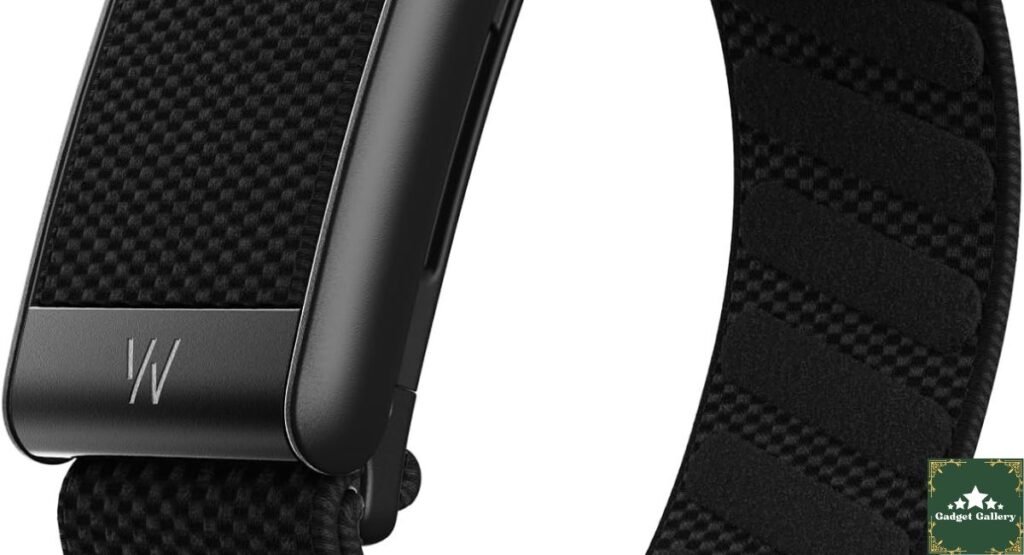
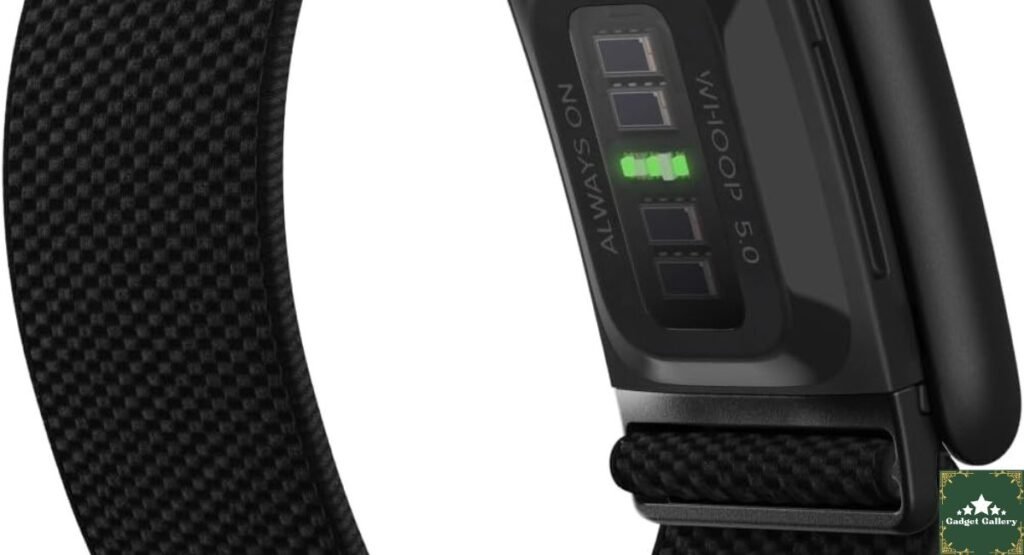
The WHOOP 5.0 MG is the current generation of WHOOP’s flagship health tracker. The “MG” refers to the Any-Wear Technology feature that lets you wear it off your wrist—in a bicep band, a bra, or even special shorts with a sensor pocket. The core device is still what it’s always been: a screenless, always-on biometric sensor focused entirely on three things.
Strain. How hard did your body work today—across all activity, not just structured workouts?
Recovery. Based on your sleep, HRV, resting heart rate, and respiratory rate, how prepared is your body for effort today?
Sleep. Not just duration—actual sleep stages, consistency, and a calculated sleep debt number that follows you all week.
There’s no watch face. No notifications. No steps displayed in a ring. No gamification.
That absence of information is, weirdly, the whole point.
WHOOP is telling you one thing: here’s what your body actually did overnight, here’s how recovered you are right now, and here’s how much you should push today. Everything else is noise.
The First Two Weeks: Uncomfortable Data
I put the WHOOP on my left wrist, downloaded the app, and went to bed.
The next morning I had my first recovery score: 34%.
Red. Not even close to green.
I had slept what I thought was a solid seven hours. The WHOOP told me I got 5 hours and 43 minutes of quality sleep—accounting for time awake, light sleep that doesn’t restore, and a shorter REM cycle than my body apparently needs.
My first reaction was skepticism. This thing was wrong. I felt fine.
My second reaction, about 2 PM that same day when I hit a wall of exhaustion so specific it felt like someone had turned a dial, was less skeptical.
The WHOOP hadn’t told me I was tired. It told me I was tired before I felt it. That’s the version of health tracking I’d been looking for without knowing it had a name.
The first uncomfortable lesson: My sleep quality and my sleep duration had almost no relationship to each other. Seven hours in bed didn’t mean seven hours of restoration. The WHOOP measures respiratory rate, heart rate, and HRV throughout the night to calculate what it calls sleep performance—and mine was consistently around 65-72% for the first two weeks while I figured out what was actually affecting it.
What Changed When I Started Paying Attention to Recovery Scores
Week three is where this tracker earned its price in full.
I had a hard workout planned—a long trail run I’d been looking forward to all week. The morning of, my recovery score came in at 28%. Resting heart rate was elevated. HRV was suppressed. The app said, “Your body is showing signs of strain. Today is better suited for light activity or rest.”
Old me: ignores this and runs anyway.
New me: went for a 40-minute walk instead.
I won’t pretend that was easy. But I woke up the next morning with a recovery score of 71%. And the day after that, I had one of the best runs I’d had in months—the kind where it feels effortless and you realize, somewhere around mile four, that this is what recovered actually feels like.
That single decision—trusting the data over my ego—probably taught me more about training smarter than any fitness app I’d used in the previous five years.
The Subscription Model: Is It Worth It?
This is the question everyone asks first, and it’s the right question to ask.
WHOOP doesn’t charge you for the hardware. You pay a membership fee—around $239 per year for the standard plan—and that membership includes the device. The 12-month membership bundle on Amazon is the most straightforward way to start, and it’s what I ordered.
Why the subscription model exists: WHOOP processes your biometric data continuously and delivers coaching recommendations through the app. The membership funds ongoing software development, the coaching algorithms, and the hardware replacement program (they’ll send you a new device if yours fails).
Is it worth $239 a year?
That depends entirely on what you do with the data.
If you’re the type of person who checks the app, reads the recommendations, and actually adjusts your behavior—yes. Without question. Three months of genuinely understanding my body’s response to stress, sleep, alcohol, caffeine timing, and training load has been worth significantly more than $239 in avoided overtraining alone.
If you’re going to glance at it and think, “That’s interesting,” and carry on exactly as before—you’re better off with a cheaper fitness tracker.
WHOOP is a coaching system that requires you to be a willing student. The membership funds the teacher. Whether you show up to class is your decision.
Sleep Tracking: The Feature I Underestimated
I thought the recovery scoring would be the most valuable part. Sleep tracking turned out to matter more.
The WHOOP app doesn’t just show you how long you slept. It shows you:
- Time in each sleep stage (light, deep, REM) across the full night
- Sleep consistency score—how regular your sleep timing is across the week
- Sleep debt—how many hours behind you are over a rolling 5-night window
- Recommended sleep duration based on your planned activity for tomorrow
That last one is underrated. If I tell WHOOP I have a hard training session tomorrow, it adjusts my sleep need upward and tells me what time to go to bed to wake up recovered. This sounds like a basic feature. Actually using it changed my sleep timing more than anything else I tried.
The menstrual cycle insights (WHOOP 5.0 includes this natively for female users) track how hormonal phases affect recovery scores, strain tolerance, and sleep quality. Multiple women in WHOOP’s user community have reported this feature fundamentally changed how they scheduled training—backing off during luteal phases when recovery is naturally lower and pushing harder during follicular phases when the body handles stress better. This is a legitimately useful health feature that very few wearables handle well.
The 14-Day Battery Life: Tested Honestly
WHOOP claims 14+ days. I got consistently 11-13 days in real testing.
The difference between the claim and reality is almost certainly explained by environmental factors—temperature, how often the sensor activates for on-demand readings, and sleep tracking quality.
11-13 days is still dramatically better than any competing wearable I’ve used. The Apple Watch needs daily charging. The Garmin Forerunner 955 gets about 15 days but has a much simpler sensor package in power-save mode. For a device this data-intensive, getting nearly two weeks between charges is genuinely impressive.
The charging is done through a slide-on battery pack—you clip it onto the wristband, and it charges the device without removing it. You can charge while you sleep, while you shower, and while you’re on a call. It’s never off your wrist if you don’t want it to be.
That continuity matters for data accuracy. Any wrist-based tracker that you take off to charge is losing data during those hours. WHOOP’s charging design solves this almost entirely.
Personalized Coaching: How It Actually Works
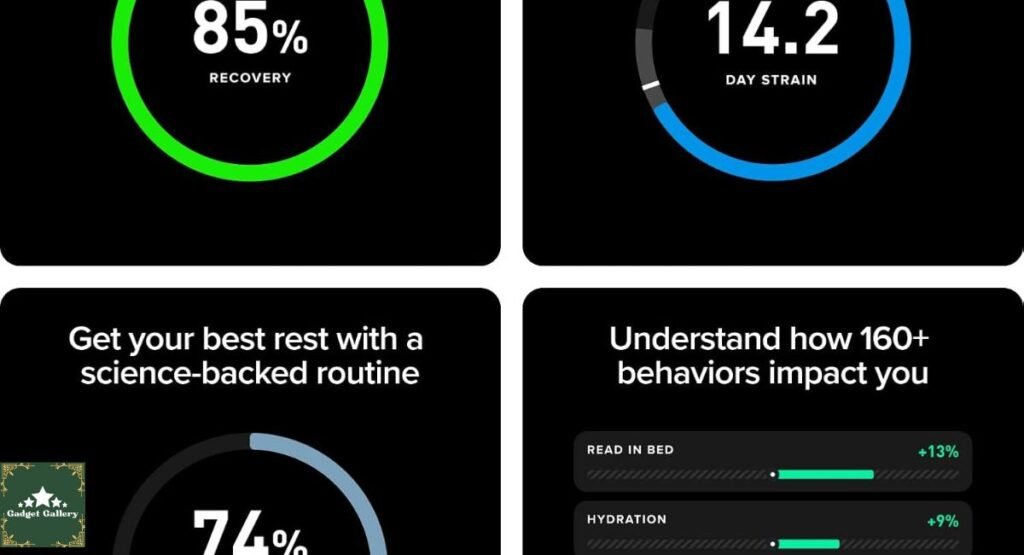
The WHOOP Journal is a daily check-in where you log behaviors—did you drink alcohol last night? Did you eat within 2 hours of bedtime? Did you nap? Did you meditate?
WHOOP cross-references your answers with your biometric data over time and shows you correlations. After about 3-4 weeks, it starts generating insights specific to you—things like “You sleep 22 minutes longer on nights you don’t drink” or “Your HRV is 18% higher on days you meditate in the morning.”
These aren’t generic tips. They’re patterns derived from your specific data. That’s what separates this from reading a sleep hygiene article.
My three most impactful personal discoveries from 90 days of journaling:
1. Evening caffeine was wrecking my deep sleep. I moved my last coffee from 3 PM to noon. My deep sleep stage percentage went from averaging 15% to averaging 21% within two weeks.
2. Alcohol—even one drink—suppressed my HRV the following night measurably. Seeing this in data form was more persuasive than knowing it abstractly.
3. 30-minute walks on rest days produced better recovery scores than complete sedentary rest. Light movement on recovery days actively improved my numbers the following morning.
None of these are revolutionary discoveries in the world of health science. But seeing them in your own data, tied to your own behavior on specific nights, hits differently than reading them in an article.
The Any-Wear Technology (MG Version)
The MG version adds WHOOP’s Any-Wear Technology—sensors embedded in compatible clothing and accessories beyond the wristband.
In practice, most users (including me) still use the wrist band primarily. The bicep band option is genuinely more comfortable during certain workouts—I used it for swimming and heavy upper body days where wrist-based sensors can give inaccurate readings during grip-heavy movements.
If you’re primarily a wristband user, the MG feature is a nice option to have but not a reason by itself to pay a premium for this model over standard WHOOP. If you swim competitively, do Olympic lifting, or hate wearing things on your wrist, the MG version is worth the extra flexibility.
Mistakes I Made (Don’t Do These)
Mistake 1: Trusting Day 1 data. Your baseline takes about 2 weeks to calibrate. My first two weeks of data were noisier and less accurate than weeks 3 onward as WHOOP learned my personal patterns. Don’t draw conclusions in the first week.
Mistake 2: Obsessing over the numbers instead of the patterns. A single bad recovery score isn’t meaningful. A week of consistently low scores is. I spent the first few weeks catastrophizing over individual numbers. The trend matters—not the daily number.
Mistake 3: Skipping the Journal. I skipped the daily journal check-in for the first 10 days because it felt tedious. That’s the input that powers the personalized insights. Without it, WHOOP is just biometrics without context. Complete the journal every morning—it takes 90 seconds.
Mistake 4: Comparing my recovery scores to other people’s. Someone else’s 70% means nothing about your 45%. Recovery is relative to your baseline. Green for you might look different from green for your training partner. This is personal data—treat it personally.
WHOOP 5.0 vs Apple Watch: The Real Comparison
People ask this constantly, so let me give you my honest take after owning both.
Apple Watch is better for notifications, apps, payments, calling, maps, fall detection, ECG, standing reminders, and integration with iPhone.
WHOOP is better for recovery optimization, sleep quality analysis, HRV tracking, training load management, menstrual cycle health insights, long battery life, and screenless focus.
They’re genuinely different tools for different purposes. If your primary goal is convenience and smartwatch functionality, get an Apple Watch. If your primary goal is understanding how your body is responding to life—training, stress, sleep, alcohol, recovery—WHOOP gives you data the Apple Watch simply doesn’t collect or present at the same depth.
I know people who own both. That’s probably the honest answer for serious athletes.
Pros and Cons
Pros
Genuinely predictive data—recovery scores consistently predicted energy and performance before I felt it consciously.
Best sleep tracking available in a wrist-based consumer wearable—not just duration but quality and consistency
14-day battery life with innovative slide-on charging that never interrupts continuous tracking
Personalized coaching that generates insights specific to your behavior, not generic advice
Any-Wear Technology (MG) provides flexibility beyond wrist-only tracking.
Menstrual cycle insights that genuinely affect how female users can optimize training and recovery
Screenless design removes the temptation of distracting notifications—it stays out of your way.
Active community—the WHOOP app has Teams features where you can share data with coaches, training groups, or even challenge friends.
Cons
Subscription required—$239/year is real money, and without it the hardware is useless.
No GPS—if you want accurate outdoor pace and route tracking, you’ll need a separate device or your phone.
Calibration takes 2 weeks—you won’t get reliable personalized data immediately.
No smartwatch features—no notifications, no payments, no apps. Pure health tracker only
Wrist fit matters a lot for accuracy—too loose and your data degrades. It takes some learning to find the right tension.
Price sensitivity—compared to a Fitbit at $100-$150, the WHOOP’s ongoing cost is substantially higher. For casual users, it may not be worth it.
FAQs
Q: Do I have to pay for the hardware separately? A: No. WHOOP’s model includes the hardware with your membership. The 12-month membership on Amazon includes the WHOOP 5.0 device. If you cancel after 12 months, you return or stop using the device. There’s no hardware fee on top of the membership.
Q: Is WHOOP accurate compared to medical devices? A: WHOOP’s HRV and heart rate readings have been validated in several peer-reviewed studies and compare favorably to medical-grade ECG for resting measurements. They are not medical devices and shouldn’t replace clinical health monitoring, but for consumer wearables their accuracy is among the best available.
Q: Can I use WHOOP without the app? A: No. The device stores data onboard and syncs to the WHOOP app for analysis. The app is where all coaching, insights, and sleep data live. A smartphone and the WHOOP app are required for the product to be useful.
Q: Is the 12-month membership renewable? A: Yes. After 12 months you can renew your membership at the current rate. WHOOP also offers month-to-month options at a higher monthly rate or multi-year commitments at reduced rates.
Q: Does WHOOP work without a phone during workouts? A: The WHOOP device stores up to 3 days of data onboard if your phone isn’t present. You can train, sleep, and go about your life without your phone nearby—data syncs when you reconnect to the app via Bluetooth.
Q: How tight does the band need to be? A: Snug but not cutting off circulation. The optical sensors need consistent skin contact to measure accurately. WHOOP recommends positioning it 1-2 finger widths above the wrist bone, tighter than you might wear a watch normally.
Q: Can I shower and swim with it? A: Yes. WHOOP is water resistant to 10 ATM (100 meters). Swimming, showering, and sweat are all fine. The MG version’s Any-Wear accessories are designed to handle the same water exposure.
Q: How is WHOOP 5.0 different from WHOOP 4.0? A: WHOOP 5.0 improved sensor accuracy, extended battery life, added the Any-Wear Technology in the MG version, and updated the coaching algorithms. If you have a WHOOP 4.0 and it’s working well, the upgrade is incremental. If you’re buying new, the 5.0 is the obvious choice.
Final Thoughts
Ninety days in, I understand something about my body that I genuinely didn’t understand before. Not because the WHOOP told me something new about human physiology—it’s not magic. But because it showed me my specific patterns, tied to my specific behaviors, consistently enough that I stopped being able to ignore them.
My resting HRV is higher than it was in March. My sleep consistency score went from 58% to 81% over three months. And I’ve had fewer of those crushing Tuesday afternoon energy crashes since I started paying attention to what the night before actually looked like.
The subscription isn’t cheap. If that’s a dealbreaker for you, it’s a dealbreaker—I won’t pretend otherwise.
But if you’re the type of person who wants to understand what’s actually happening inside your body rather than just closing activity rings and hoping for the best, the WHOOP 5.0 is the most useful health tool I’ve ever owned.
🛒 Check Current WHOOP 5.0 Price on Amazon →
Related Reviews Worth Reading
- Apple Watch Series 11 Review — 9 Months of Daily Wear — Full comparison with long-term data
- TOOBUR Smart Watch for Women Review—Budget-friendly alternative with health features
- Soundcore P30i Earbuds Review—Pair wireless audio with your WHOOP workouts
- BIGGERFIVE Kids Smart Watch Review—Health tracking for younger family members
👉 Subscribe to @5stargadgetgallery on YouTube—New gadget reviews and health tech comparisons every week. Hit the notification bell so you never miss one.
🌐 Start Your Own Health & Tech Review Blog
If this kind of in-depth testing review is something you want to create yourself, this site runs on Hostinger—the most beginner-friendly and affordable web hosting I’ve used.
Why Hostinger works for review blogs:
- Plans start at $2.99/month
- Free domain name included for the first year
- One-click WordPress installation
- Fast global servers—critical for SEO
- 24/7 live chat support
Launch your own review blog with Hostinger. →
Disclosure: This review contains Amazon Associates affiliate links. As an Amazon Associate, I earn from qualifying purchases at no additional cost to you. WHOOP was personally purchased and used for 90 days prior to writing this review. All performance data and opinions are my own.