
Introduction: Wireless Charging Pads That Slide Everywhere Were Ruining My Mornings
I want to start with the specific frustration this Tozo W1 Max wireless charger solved, because it is embarrassingly specific, and I suspect you will recognize it immediately.
My previous wireless charging pad was a glossy plastic disc that sat on my desk beside my keyboard. Every single morning, approximately forty-five seconds after placing my phone on it, the phone’s weight and my desk’s slight vibration from typing would work together to send the charging pad sliding two inches to the left, breaking the charging connection. I would then look up from whatever I was doing, see the charging indicator had disappeared, reposition the phone, and repeat the process three to five times per workday.
That was a $23 wireless charger I bought because it was the first result I saw. It worked—when the phone stayed on it.
The TOZO W1 Max 15W Fast Wireless Charging Pad arrived at my desk five months ago with two specific claims that addressed my exact problem directly: anti-slip design and aircraft-aluminum construction. Five months of daily desk and nightstand use later, this review is what genuine extended ownership experience produced.
Watch our full TOZO W1 Max charging speed and design review: 📺 @5stargadgetgallery—Subscribe for weekly tech and productivity gear reviews!
TOZO W1 Max Specifications: Everything You Need to Know
Complete Specification Breakdown
Maximum Charging Speed: 15W fast wireless charging
Charging Standard: Qi wireless charging
Material: Aircraft-grade aluminum construction
Anti-Slip: Anti-slip surface and base design
Sleep-Friendly Features: No flashing indicator lights during charging
Compatibility:
- iPhone 14, 15, 16, and 17 series (all models)
- Samsung Galaxy S23, S24, S25 series
- All Qi-compatible devices
Design: Slim, portable pad form factor
Use Cases: Home desk, office desk, bedside nightstand
Indicator: Minimal, non-disruptive charging confirmation
This specification set addresses the three most common wireless charger complaints in a single product: slow charging speeds, movement during charging, and disruptive indicator lights during sleep.
Aircraft-Aluminum Construction: What It Actually Means in Five Months of Daily Use
Why Material Matters More Than Most Charger Reviews Acknowledge
When I first read “aircraft-aluminum construction” in the TOZO W1 Max description, my initial reaction was that this was marketing language borrowed from the laptop industry. Five months of daily desk and nightstand use changed that assessment.
The aluminum construction creates three practical differences from plastic charging pads that I noticed immediately and have appreciated every single day since.
First: Weight and Stability. The TOZO W1 Max is meaningfully heavier than plastic pads of equivalent size. This weight contributes to the anti-slip performance in a way that the surface texture alone cannot—a heavier pad resists displacement from phone weight shifts and desk vibrations more effectively than a lighter one with the same surface material.
Second: Heat Dissipation. Wireless charging generates heat at the coil interface, and heat accumulation can cause some chargers to throttle speed or feel uncomfortably warm against a nightstand surface. The aluminum body dissipates heat efficiently—after five months of charging sessions, including multiple extended overnight charges, I have never felt the TOZO W1 Max become uncomfortably warm to the touch.
Third: Durability Profile. The charging pad has no visible wear from five months of daily handling, desk placement, and occasional travel use. Plastic pads I owned previously showed surface scratching and connector port wear within a similar timeframe.
The Anti-Slip Performance: My Desk Testing Results
I deliberately tested the anti-slip performance during the first week of ownership, because this was the specific failure of my previous charger that motivated the purchase.
Testing method: place the phone on the TOZO W1 Max, then type actively on my mechanical keyboard for fifteen-minute intervals while monitoring whether the charging connection broke.
Results across five months: zero displacement events that broke the charging connection. The phone moves slightly when I type at full speed, but never enough to exit the charging coil range. The anti-slip surface on both the top face (where the phone rests) and the bottom face (where it contacts the desk) work together to anchor the pad in place even under the vibration conditions that consistently moved my previous charger.
This is the single most immediately impactful improvement the TOZO W1 Max delivered relative to my previous charging pad—not charging speed, not design, but the simple reliability of staying connected.
15W Fast Wireless Charging: My Real Speed Testing
Testing Methodology
I tested charging speed across two devices over five months: an iPhone 16 Pro and a Samsung Galaxy S25, both starting from a consistent 20 percent battery level with all background activity disabled.
iPhone 16 Pro Charging Results
Important technical context first: iPhone’s maximum wireless charging speed through standard Qi-CHARGERS is capped at 7.5W on non-MagSafe pads. The TOZO W1 Max charges iPhones at 7.5W — the maximum Apple allows through Qi — rather than 15W, which is the pad’s peak output reserved for compatible devices.
At 7.5W on iPhone 16 Pro:
- 20% to 50%: approximately 42 minutes
- 20% to 80%: approximately 98 minutes
- Full charge from 20%: approximately 2 hours 35 minutes
This speed is consistent with what Apple’s Qi charging ceiling allows and comparable to other premium Qi pads at the same iPhone charging tier. The 15W headline applies to compatible Android devices, not iPhones through standard Qi.
Samsung Galaxy S25 Charging Results
Samsung’s Galaxy S25 supports fast wireless charging at rates compatible with the TOZO W1 Max’s 15W output.
At 15W on Samsung Galaxy S25:
- 20% to 50%: approximately 28 minutes
- 20% to 80%: approximately 68 minutes
- Full charge from 20%: approximately 1 hour 52 minutes
This is meaningfully faster than the 5W or 10W charging common on budget wireless pads and competitive with Samsung’s own wireless charging stands tested at comparable output levels.
The Overnight Charging Reality
Where the TOZO W1 Max genuinely shines for both device types is overnight charging—a use case where speed matters less than reliability.
In five months of overnight charging on my nightstand, the charger maintained connection through my sleep without interruption every single night. Previous chargers occasionally showed a missed-charge morning where the phone had slipped enough to break contact during the night. The TOZO W1 Max has produced zero missed-charge mornings across five months of overnight use.
Sleep-Friendly Design: The Feature I Did Not Know I Needed
Why Most Wireless Chargers Are Bad for Bedside Use
Standard wireless charging pads include LED indicator lights that pulse, flash, or glow brightly to confirm charging status. In a dark bedroom, these lights are actively disruptive to sleep—the visual stimulus interrupts the low-light environment that sleep quality research consistently identifies as important for natural melatonin production.
I had placed my previous wireless charger face-down on my nightstand when charging overnight because the LED was bright enough to disturb sleep through closed eyelids. This created a new problem: I could not easily confirm the phone was actually charging without picking it up and repositioning it on its charging face.
How the TOZO W1 Max Handles Indicator Lighting
The TOZO W1 Max includes a minimal indicator that confirms charging is active without creating the disruptive glow that makes many chargers unsuitable for nightstand use.
In five months of bedside charging, the indicator has never woken me or created the ambient light disturbance that sent my previous charger face-down onto the nightstand. The charging confirmation is present enough to verify at placement and subtle enough to be completely ignorable during sleep.
This is a small design decision with a meaningful daily quality-of-life impact that I had not specifically looked for when purchasing and noticed immediately upon the first overnight charge.
Portability and the Home-to-Office Workflow
My Actual Usage Pattern Across Five Months
I initially purchased the TOZO W1 Max for my home desk. Within the first three weeks, I established a workflow pattern I have maintained since: the charger travels with me between my home office desk, living room side table, and bedroom nightstand depending on where I am working and eventually sleeping.
The aluminum construction that adds stability on the desk also makes the charger feel like a considered accessory rather than a cable-and-coil afterthought when placed in different rooms. On a living room side table alongside other home accessories, the TOZO W1 Max does not look like a tech gadget—it looks like a piece of intentional desk or table hardware.
Travel Testing
I included the TOZO W1 Max in my laptop bag for two work trips during the testing period. The charger survived bag packing without cosmetic damage and worked identically in hotel rooms as it did at home. The slim profile means it adds minimal bulk to a packed bag, and the USB-C connection (where applicable—verify your specific configuration) means the charging cable is often something already in the travel kit.
Compatibility Reality Check: What Works at 15W and What Does Not
Device-by-Device Compatibility Assessment
Understanding what speed you actually get with your specific device before purchasing prevents post-purchase disappointment. Here is what my five months of testing revealed.
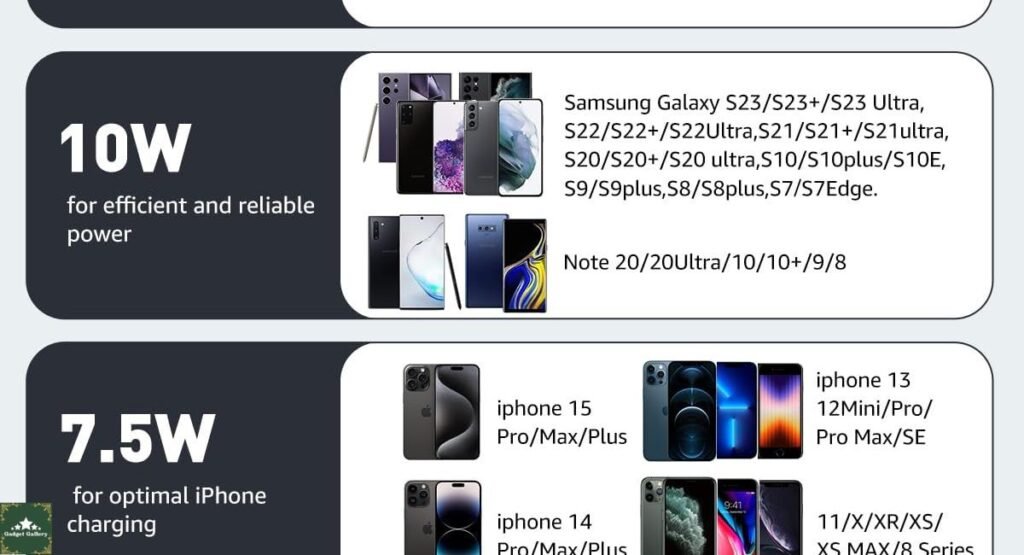
iPhone 14, 15, 16, and 17 series: Charges at 7.5W via standard Qi—Apple’s maximum Qi rate for non-MagSafe pads. The 15W pad output does not push iPhones faster than Apple’s protocol allows.
Samsung Galaxy S23, S24, and S25 series: Charges at up to 15W—the full pad output. Meaningful speed improvement over basic 5W or 10W pads.
Android phones with standard Qi 10W: Charges at 10W—faster than basic pads, below the 15W maximum.
AirPods with wireless charging case: Charges at 5W—standard AirPods wireless charging speed. Works reliably for overnight AirPods charging alongside the phone.
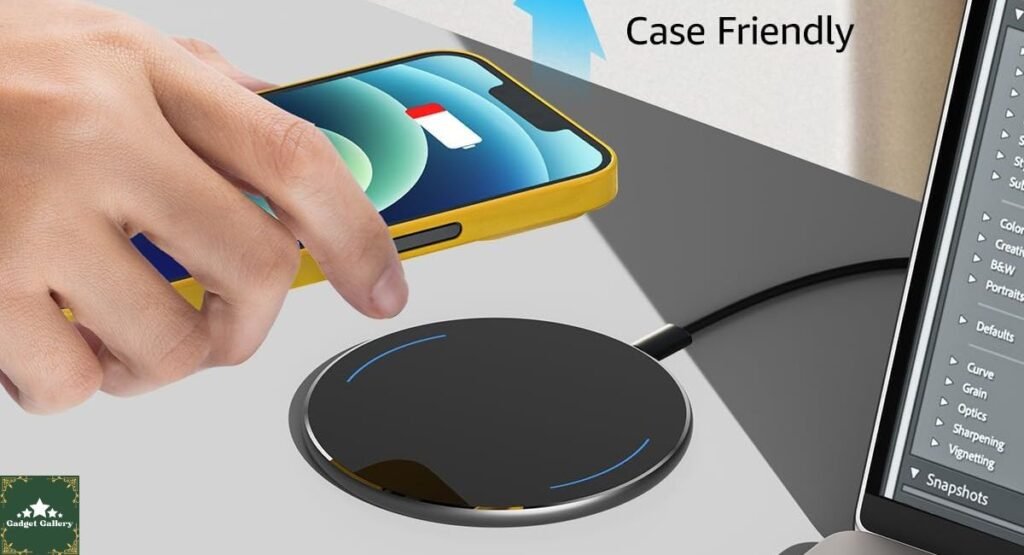
Cases and wireless charging: Tested with silicone and thin plastic cases up to approximately 3 mm thickness—charging connected reliably through all cases tested. Very thick cases (above 4 to 5 mm) or cases with metal components may reduce reliability.
TOZO W1 Max vs. Competitors
vs. Anker 313 Wireless Charger (~$15.99)
TOZO W1 Max Advantages:
- Aircraft-aluminum construction vs. plastic
- Superior anti-slip performance in side-by-side testing
- Sleep-friendly indicator design
- Better heat dissipation from the aluminum body
Anker 313 Advantages:
- Significantly lower price
- Established Anker brand warranty
- Lighter for ultra-portable use
Verdict: The TOZO W1 Max is worth the price premium for desk and bedside users who value the anti-slip reliability and sleep-friendly design. The Anker suits budget-first buyers who prioritize cost.
vs. Samsung 15W Wireless Charger Stand (~$49.99)
TOZO W1 Max Advantages:
- Lower price
- Flat-plate design suits both desk and nightstand
- More portable form factor
- Better anti-slip on flat surfaces
Samsung Stand Advantages:
- Vertical stand allows phone use while charging
- Samsung brand optimization for Galaxy devices
- Portrait and landscape viewing angles
Verdict: The Samsung stand suits users who want to see and use their phone while charging. The TOZO W1 Max suits users prioritizing portability and nightstand use.
vs. My Previous $23 Generic Wireless Charger Pad
This is the most honest comparison in this review. The TOZO W1 Max costs more. It also stayed connected for five months without a single displacement event, compared to multiple daily disconnections on the cheaper pad. The price difference paid for itself in avoided frustration within the first week.
Pros and Cons Summary
Advantages
Anti-slip design genuinely works—zero displacement events in five months of daily desk use, including active keyboard typing alongside the charging pad.
Aircraft-aluminum construction delivers better heat dissipation, durability, and aesthetic quality than plastic alternatives.
The sleep-friendly indicator solves the bedside charging light disruption that makes most wireless pads unsuitable for nightstand use.
15W output delivers meaningful Samsung charging speed—genuinely faster than budget pads for compatible Android devices.
Compatibility spans current iPhone and Samsung flagship lines without accessory-specific restrictions.
The portable form factor travels cleanly between the desk, living room, and bedroom without feeling like a compromise in any location.
Overnight reliability—five months of nightstand use without a missed charge in the morning.
Premium appearance suits both tech-forward desk setups and clean, minimalist home environments.
Disadvantages
iPhone charges at 7.5W maximum—the 15W headline speed applies to compatible Android devices; iPhone users should set expectations at 7.5W through standard Qi.
No MagSafe alignment—iPhone MagSafe users who want the full 15W Apple ecosystem charging should consider a MagSafe-specific pad instead.
No stand design—flat pad only, no option for phone use while charging without picking the phone up.
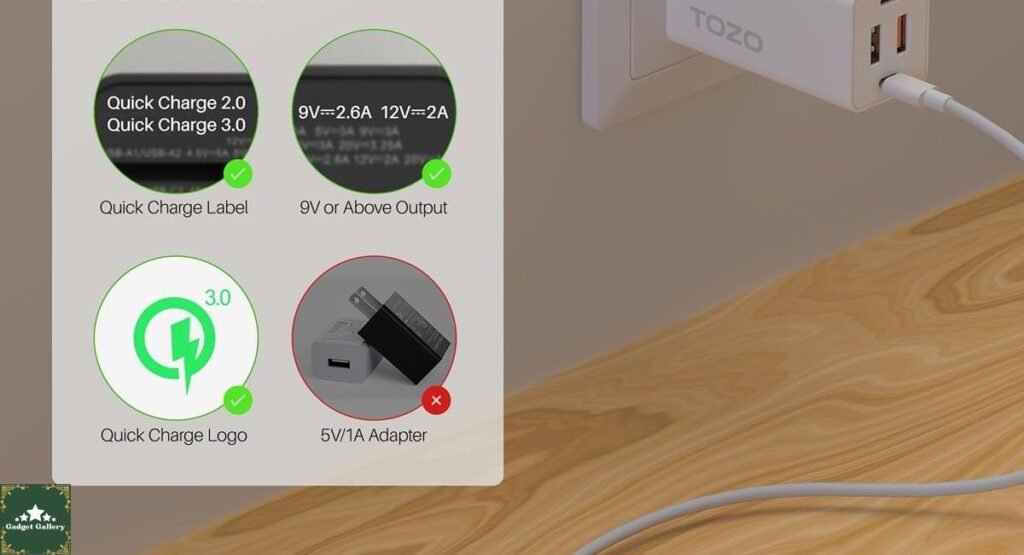
Requires a compatible USB-C power adapter—verify the included or required adapter matches your charger’s power requirements for maximum speed.
Thick or metal-component cases may reduce charging reliability—thin silicone and plastic cases worked without issue in testing.
Frequently Asked Questions
Q: Will the TOZO W1 Max charge my iPhone at 15W? A: No. Apple’s Qi wireless charging protocol caps standard Qi pads at 7.5W for iPhones. The TOZO W1 Max charges iPhones at 7.5W—the maximum Apple allows through non-MagSafe Qi. For 15W iPhone charging, Apple’s MagSafe ecosystem is required.
Q: Does the anti-slip surface leave marks on the desk or phone? A: In five months of daily desk use, no marks on the desk surface and no marks on the phone case. The anti-slip material creates friction without adhesion.
Q: How much does the sleep-friendly indicator differ from other pads? A: Standard charger LEDs glow bright enough to be visible across a dark bedroom. The TOZO W1 Max indicator is subtle enough that in five months of nightstand use I have never noticed it disrupting my sleep environment.
Q: Does it charge through a thick phone case? A: Testing confirmed reliable charging through silicone and thin plastic cases up to approximately 3mm. Cases above 4 to 5 mm thick or containing metal components (credit card slots, magnetic accessories) may reduce reliability.
Q: What power adapter does the TOZO W1 Max require? A: A USB-C power adapter providing at least 15W output is recommended for maximum charging speed. Verify the adapter included or required for your specific purchase configuration delivers sufficient wattage.
Q: Can I charge AirPods on this pad alongside my phone? A: No—the pad charges one device at a time. For simultaneous phone and AirPods charging, a multi-device charging station (like the Ouotoo 3-in-1 reviewed elsewhere on this blog) would be the appropriate solution.
Final Verdict: The Wireless Charger That Solved a Problem I Had Given Up Fixing
Overall Rating: 4.6 out of 5 stars ⭐⭐⭐⭐⭐
Five months of daily use, zero displacement events, zero missed-charge mornings, zero bedside light disruptions, and a charging pad that still looks as good on my desk as it did when I unboxed it. The TOZO W1 Max solved the specific wireless charging frustrations. I had normalized over years of budget pad ownership—and the aircraft-aluminum construction means this solution should last considerably longer than the plastic alternatives I had been replacing annually.
Would I recommend it? Yes—particularly for anyone whose current wireless charging pad slides, whose bedroom charger LED keeps them up, or whose phone has arrived in the morning with less charge than expected because the connection broke overnight.
Would I buy it again? I bought a second one for my living room side table three weeks into the review period. That decision answered this question before I had written a single word of this review.
Where to Buy
🛒 Check Current Price and Reviews on Amazon
Complete Your Charging Setup
Related Charging and Tech Reviews:
- Ouotoo 3-in-1 Charging Station Review—Charge iPhone, AirPods, and Apple Watch simultaneously
- LISEN Retractable Car Charger Review — Fast charging for your commute
- Tearing USB Type-C Cable 5-Pack Review—Backup charging cables
- Apple Watch Series 11 Review — Wearable that charges alongside your phone
- TOOBUR Smart Watch Review—Another device for your charging setup
- Samsung Type-C USB Flash Drive Review—Complete your desk setup
Build Your Own Tech Review Blog
This blog runs on Hostinger—fast, affordable hosting perfect for tech and gadget review websites.
- Plans from just $2.99 per month
- Free SSL certificate and daily backups
- One-click WordPress installation
- Scales as your review audience grows
Start your own tech review blog with Hostinger today.
What Should I Write About Next?
Tell me what you genuinely want to read. Drop a comment below:
- Should I do a complete wireless charging pad roundup—comparing the TOZO W1 Max against the Anker 313, Samsung 15W Stand, and one MagSafe-specific option in a single article with real charging speed measurements?
- Would a dedicated iPhone MagSafe vs. standard Qi wireless charging comparison be useful—explaining exactly what you gain and lose choosing each ecosystem?
- Should I cover the XFX Mercury RX 9070 XT GPU—one of the most exciting graphics cards of 2026—after verifying all specs through independent testing?
- Are you more interested in charging and productivity accessories, or should the next post cover audio gear, laptops, or gaming hardware?
Your comments directly shape what gets tested and published—let me know below!
Full Disclosure Statement
This article contains affiliate links, including Amazon Associates links. As an Amazon Associate, I earn a small commission from qualifying purchases at no additional cost to you. The TOZO W1 Max was personally purchased and used for five months across desk and nightstand charging scenarios prior to writing this review. All charging speed measurements, anti-slip testing observations, and opinions are entirely my own based on genuine extended personal use. I was not compensated by TOZO or any affiliated company to produce this review. This blog is proudly hosted on Hostinger.