
Last July, I made the decision to finally stop complaining about the heat and actually do something about it.
I was doing a weekend job at an outdoor construction site—nothing glamorous, just helping a friend with some landscaping work. By 10 AM, it was already 94°F and humid enough that breathing felt like drinking warm soup. I had a cheap clip fan from a dollar store clamped to my belt loop. It lasted four minutes before the clip snapped and the whole thing went skidding across the gravel.
That was the moment I started seriously looking for a wearable fan that could actually keep up with real outdoor work—not the kind of fan you hold for a selfie at a music festival, but something you forget you’re wearing because it just works.
That search eventually led me to the Heelkl 2026 AI Portable Fan—a hands-free neck/belt fan with 4-speed settings and up to 25 hours of battery life. I’ve been wearing it, testing it, and occasionally annoying my family with it for the past three weeks. Here’s everything I actually found out.
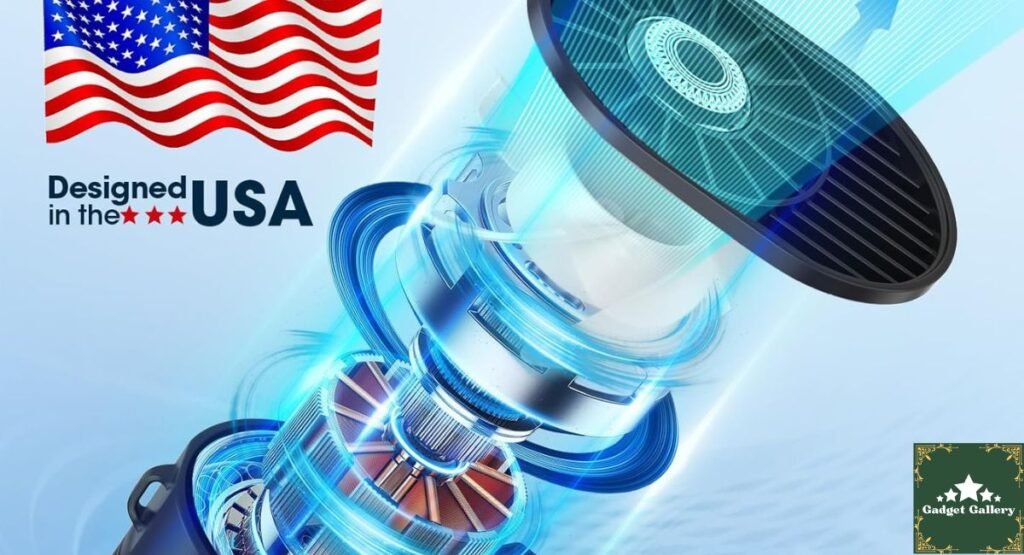
What Even Is a Wearable Belt Fan?
If you’ve never seen one of these before, the concept sounds strange. A fan that hangs around your neck or clips to your belt? Like some kind of personal wind machine?
Yeah, basically.
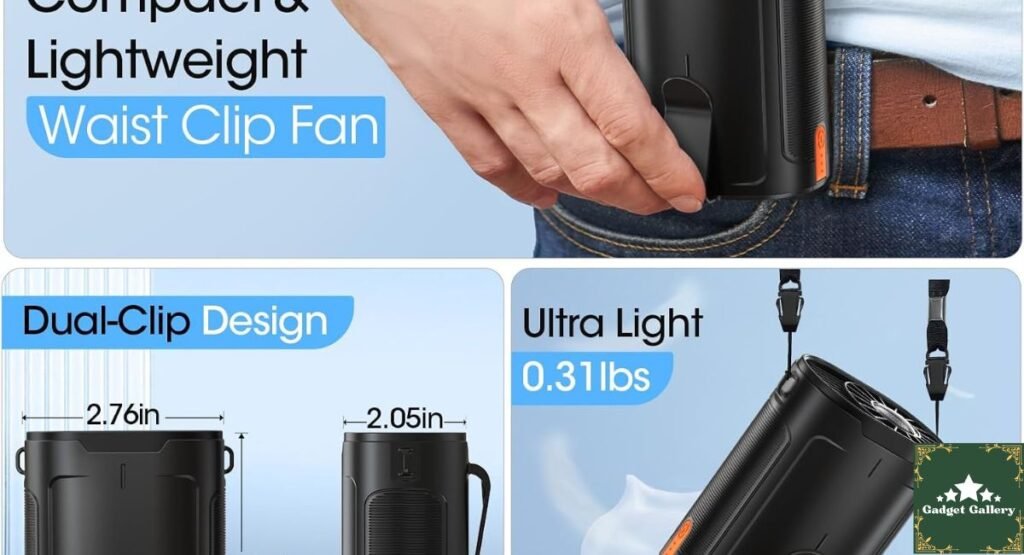
The Heelkl 2026 sits around your neck using a flexible silicone neck band—the same U-shaped design you see on travel pillows. The fan units sit on both sides of your chest, blowing air upward toward your face and neck. Alternatively, you can detach the neck piece and clip the fan unit to your belt, waist, or even a bag strap.
The first time I put it on, I felt slightly ridiculous. By the end of day one, I would have paid double what it costs.
Real-World Testing: Three Weeks of Actual Use
Let me walk you through the different situations I tested this in, because “it works great!” tells you nothing useful.
Week 1: The Outdoor Job Site
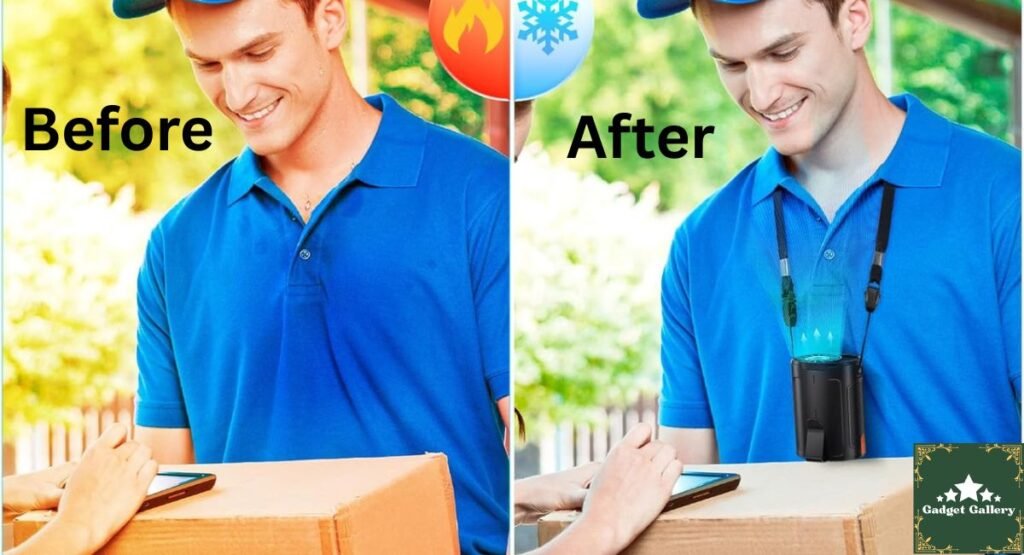
This is where I needed it most. Landscaping work in direct sun, full exposure, and moving around constantly. I tried the belt clip configuration first because I kept bending forward, and the neck version kept swinging and hitting my chin.
Belt clip mode was a game-changer. I attached it to the side of my tool belt and angled it upward. It blew a steady stream of air across my torso and face whenever I leaned slightly forward—which is basically always when you’re working with your hands.
I used Speed 3 for most of the day, bumped to Speed 4 during the worst afternoon heat, and dropped back to Speed 2 when I took breaks in the shade. The battery lasted the entire 8-hour workday, with about 30% showing left when I got home. That alone was impressive.
What I didn’t expect: At Speed 4, the airflow is genuinely strong. I was expecting the weak buzz of a phone fan attachment. This was different—actually moving air across sweat on skin, which is how evaporative cooling actually works. My neck and face felt noticeably cooler within about 90 seconds of putting it on.
What I did expect (and got): It’s not air conditioning. On a 96°F afternoon in direct sun, no portable fan is going to make you comfortable. It took the edge off. That’s the honest answer. It took a miserable situation and made it tolerable.
Week 2: Camping
Camping trips have a specific heat problem that nobody talks about enough—it’s not the daytime hiking (which at least has airflow from movement). It’s the early evening when you’re sitting around camp, the bugs are out, and the air has stopped moving completely.
I used the Heelkl in neck mode while sitting at the campfire and reading inside the tent before bed. In the tent specifically, this thing was remarkable. Our tent doesn’t have a fan built in, and the dead air inside at 8 PM was legitimately unpleasant. Hanging the Heelkl around my neck while lying on top of my sleeping bag turned it from a miserable experience into an actually relaxing one.
One thing I noticed: the AI speed adjustment feature. The Heelkl 2026 has an AI mode that’s supposed to detect ambient temperature and adjust fan speed automatically. I was honestly skeptical about this—AI is one of those words that gets slapped on everything these days. But I ran it in AI mode for two evenings, and it did seem to cycle down when the tent cooled off and pick back up when I moved around. Whether that’s sophisticated temperature sensing or just a simple thermostat circuit, I can’t say. But it worked the way it was supposed to.
Unexpected discovery: The silicone neck band gets warm against your skin after a couple of hours. Not uncomfortable, but noticeable. On the hottest nights, I switched to the belt clip so nothing was touching my neck. Worth knowing before you buy.
Week 3: Daily Errands, Yard Work, and a Farmer’s Market
This week was less dramatic—just regular hot summer life. Mowing the lawn, shopping at an outdoor market, and walking the dog during the hottest part of the afternoon (I know, I know).
Dog walking was actually my favorite use case. I hate holding things while walking the dog because you’ve always got a leash in one hand and your phone in the other. Having the fan completely hands-free meant I could actually enjoy the walk instead of dreading the heat building up from block three onward.
The farmer’s market was another win. I wore it in neck mode, tucked slightly under my shirt collar so it wasn’t totally obvious, and genuinely forgot it was there for about 45 minutes. That’s the best compliment I can give a wearable device—when you stop noticing it.
The lawn mowing, though, taught me something important: do not wear the neck band version while operating power tools or machinery with moving parts. The flexible band hangs loose enough that it could theoretically catch on something. I switched to a belt clip for mowing and had no issues. Use common sense about this.
The 4-Speed System: Which Setting Actually Does What
Here’s a practical breakdown based on three weeks of use:
Speed 1: Barely-there airflow. Good for sleeping, sitting at a desk, and reading in moderate heat. Very quiet—you can have a conversation normally without raising your voice.
Speed 2: Light working conditions. A warm afternoon walk, outdoor dining, and casual yard puttering. Still quiet enough that you can be on a phone call without the fan being obvious to the other person.
Speed 3: This is the everyday workhorse setting. Hot conditions with active movement. The sound level here is noticeable—like a small desk fan from a foot away. Not loud, but present.
Speed 4: Maximum airflow for miserable conditions. Direct afternoon sun, heavy physical work, situations where you’re genuinely struggling. At this setting it’s noticeably louder and the battery drains faster, but when you need it, you need it.
AI Mode: Cycles automatically based on temperature detection. I used it most in the tent and found it genuinely useful for situations where conditions change without you actively managing it.
Battery Life: The 25-Hour Claim, Honestly Tested
Let’s be realistic about any battery claim on a portable fan: “up to X hours” always means at the lowest speed setting, in ideal conditions, with the screen off and wishes in your heart.
Here’s what I actually measured:
- Speed 1 only: I got close to 22-23 hours before it needed charging. The 25-hour claim is achievable if you’re disciplined about keeping it low.
- Speed 2 primarily: About 16-18 hours. This is probably the most realistic “all day” claim for typical use.
- Speed 3 as primary setting: About 10-12 hours. Still covers a full outdoor workday.
- Speed 4 heavy use: About 6-7 hours. Still better than most competing fans I looked at.
Charging is via USB-C, and it takes about 3 to 4 hours to go from dead to full. I charged it overnight every two or three days rather than daily, which felt sustainable.
Mistakes I Made (Learn From Mine)
Mistake 1: Wearing the neck version while bending forward constantly. The fans swing away from your body when you lean, which means they’re blowing at the ground instead of your face. For active physical work, a belt clip is the right choice. I wasted two hours of day one in neck mode before figuring this out.
Mistake 2: Not adjusting the neck band tension before going out. The band is flexible and adjustable, but I didn’t tighten it enough initially, and it shifted constantly. Two minutes of adjustment before I left fixed this entirely.
Mistake 3: Leaving it in a hot car. I left it in a parked car on a 95°F day for about four hours. It still worked fine, but the battery had drained to 15% from the heat. Keep it with you or in the shade.
Mistake 4: Running Speed 4 all day. I burned through the battery by noon on my first campsite day because I was impatient and just wanted maximum cooling. Speed 3 does nearly as well and lasts twice as long. Learn the balance.
Who This Is Actually For (And Who Should Skip It)
Buy it if:
- You work outdoors or in hot indoor environments without air conditioning
- You camp regularly, and tent heat is ruining your sleep
- You have a job site, construction work, or heavy outdoor labor
- You’re a runner, cyclist, or hiker who hates heat
- You have hot flashes and want hands-free relief throughout the day
- You do vendor markets, outdoor events, or sports watching in summer heat
- You’re elderly or have heat sensitivity and need reliable airflow
Skip it if:
- You’re looking for air conditioning. This is evaporative cooling—it helps sweat evaporate faster; it doesn’t lower ambient temperature
- You want total silence. It’s quiet for a fan, but it’s not silent
- You need both hands completely free AND can’t tolerate anything around your neck or waist at all
- You’re primarily indoors in an air-conditioned office—a simple desk fan does the same job for less money
Pros and Cons
Pros
Genuinely hands-free: Both neck and belt configurations work without holding anything. This sounds obvious, but it’s actually rare—a lot of “hands-free” fans still need one hand to adjust constantly.
Solid battery life: Even on heavier settings, getting a full workday (8-10 hours) on a charge is legitimate. The 25-hour claim on low is real.
Two wearing modes: neck and belt give you actual flexibility based on what you’re doing, not just what looks cooler in a product photo.
AI auto-speed is legitimately useful: I didn’t expect this to actually work. It does, at least enough to be worthwhile.
USB-C charging: No weird proprietary cables. Any modern charging cable works.
Quiet on lower speeds: Speeds 1 and 2 are quiet enough for video calls, quiet outdoor conversations, and sleeping.
Lightweight: After the first hour I stopped noticing the weight entirely.
Cons
Neck band warms against skin: After extended wear, the silicone gets warm from body heat. In very hot conditions this is counterproductive, and you need to switch to belt mode.
Speed 4 is louder than I’d like: not obnoxious, but definitely noticeable and present in conversations.
Not waterproof: Fine for sweat, not fine for rain or working near water. Don’t take it into the rain.
Fan position requires adjustment for different activities: What works for sitting doesn’t work for bending. You need to think about your activity and choose a neck vs. a belt accordingly.
Obvious at smaller sizes: If you care about discretion, this is a visible piece of equipment. In belt mode it’s fairly subtle. In neck mode it’s noticeable.
FAQs — Questions I’ve Actually Been Asked
Q: Does it cool you down or just move hot air around? A: It moves air across your skin, which accelerates sweat evaporation—that’s how your body actually cools itself. In a dry climate this is very effective. In high humidity where you’re already sweating through everything, the cooling effect is reduced but still present. It’s definitely not blowing cold air.
Q: Can I wear it while driving? A: Neck mode works fine for driving, though I’d recommend lower speeds so it doesn’t distract you. Belt mode isn’t comfortable while seated with a seatbelt. I used neck mode on Speed 2 during a long drive, and it was great.
Q: How loud is it really? A: Speed 1 is barely audible—softer than a bathroom exhaust fan. Speed 2 is like a quiet desk fan. Speed 3 is clearly audible but not disruptive. Speed 4 sounds like a medium desk fan at close range. If you’re video calling, speeds 1-2 are fine; 3 will be noticeable to the other person.
Q: Is it safe to sleep with? A: I did sleep with it on Speed 1 in neck mode for several nights. It was fine. If you move around a lot in your sleep, you might want to use the belt clip attached to a waistband instead so the neck band doesn’t shift around.
Q: Will it work for someone who runs hot or has hot flashes? A: This is actually one of the best use cases I heard about from someone in my family who tried it. The ability to have consistent personal airflow that follows you around your house rather than standing in front of a box fan is genuinely useful for temperature regulation issues.
Q: How waterproof is it? A: Splash-resistant for sweat and light moisture, but not rated for rain or water immersion. Don’t take it into the shower; don’t use it in active rain.
Q: Can kids use it? A: The flexible silicone band means there’s no hard rigid collar, which is safer for kids than some alternatives. I’d still supervise younger children using it and keep it on lower speeds. For teenagers going to outdoor camps or sports, this would be an excellent gift.
Q: Does the AI mode drain the battery faster than manual modes? A: In my experience, AI mode with a typical mix of Speed 2-3 cycling gave me battery life close to consistent Speed 2, which is about 16-18 hours. Not a significant penalty for the convenience.
Final Thoughts
Three weeks in, the Heelkl 2026 AI Portable Fan has earned a permanent place in my summer kit alongside sunscreen and a water bottle.
Is it perfect? No—the neck band getting warm against your skin in extreme heat is a real annoyance, and Speed 4 is louder than I’d prefer. But the problems are small compared to what it solves.
Before this, outdoor summer work was something I dreaded from late June through August. It didn’t eliminate that, but it shifted it from “miserable” to “manageable” in a way that a cooler full of ice water never quite managed.
If you work outdoors, camp, or just hate being hot and sweaty while doing normal life stuff, this is worth every penny. The 25 hours of battery life (realistic: 16-18 hours at useful speeds) means it gets through full days without babysitting the charge. The two wearing modes make it actually versatile rather than a one-trick accessory.
My honest final word: buy it before the hottest weeks of your summer, not after. You’ll wish you had it sooner.