
My eight-year-old asked Alexa what dinosaurs smelled like.
I’m standing in the kitchen making dinner, half-listening, expecting the usual “I’m not sure about that” response. Instead, Alexa launched into a genuinely thoughtful answer—something about decay, vegetation, and how paleontologists study ancient environments to make educated guesses. My son said, “That’s actually cool,” and ran off satisfied.
I stood there for a moment holding a spatula, mildly impressed.
That interaction happened about three weeks into having the Amazon Echo Dot (newest model) in Charcoal in our kitchen. It was the moment I stopped treating it as a fancy alarm clock and started paying attention to what had actually changed in how this device works.
Six weeks of daily use across three different rooms later—here’s the full, honest story.
What Actually Makes This Echo Dot Different From Previous Versions
Before I describe how it performed, I want to address the question I had before buying it: is this actually different from the Echo Dot? I returned two years ago because it was just okay?
The answer is yes—but the most important difference isn’t hardware. It’s Alexa+.
<cite index=”10-1″>This generation is built and marketed as “Designed for ‘Alexa+’—Amazon’s newer, more conversational version of Alexa rather than the older command-based assistant most people are used to. In practice, that means you can talk to it more naturally, asking follow-up questions, changing your mind mid-sentence, or stringing together requests, instead of having to phrase everything as a rigid voice command. </cite>
The old Alexa worked like a search engine—you had to know the exact phrase. The new one works more like talking to someone who’s actually paying attention. That dinosaur conversation my son had? That wouldn’t have happened on a previous Echo Dot. The old one would have just said “I found some results on the web” and left it there.
<cite index=”11-1″>Full access to Alexa+ on compatible devices is included free with a Prime membership. </cite> If you already pay for Prime—which most people reading this do—you’re getting this upgraded intelligence at no extra cost. That’s the thing the marketing doesn’t make obvious enough.

Where I Put Each One and What Actually Happened
I bought two of these. One in charcoal for the kitchen/dining room, one for my home office. My son claimed the office was open within four days, so it became a three-room test almost immediately.
The Kitchen and Dining Room
This is where the Echo Dot lives most naturally for most households and where I used it most heavily.
The cooking workflow became genuinely better. Not just “Alexa, set a timer”—though that still works perfectly. What surprised me was the recipe integration. I described a dish I wanted to make, it suggested a recipe, and when I asked follow-up questions (“What can I substitute for cream of tartar?”), it answered contextually rather than starting the conversation over.
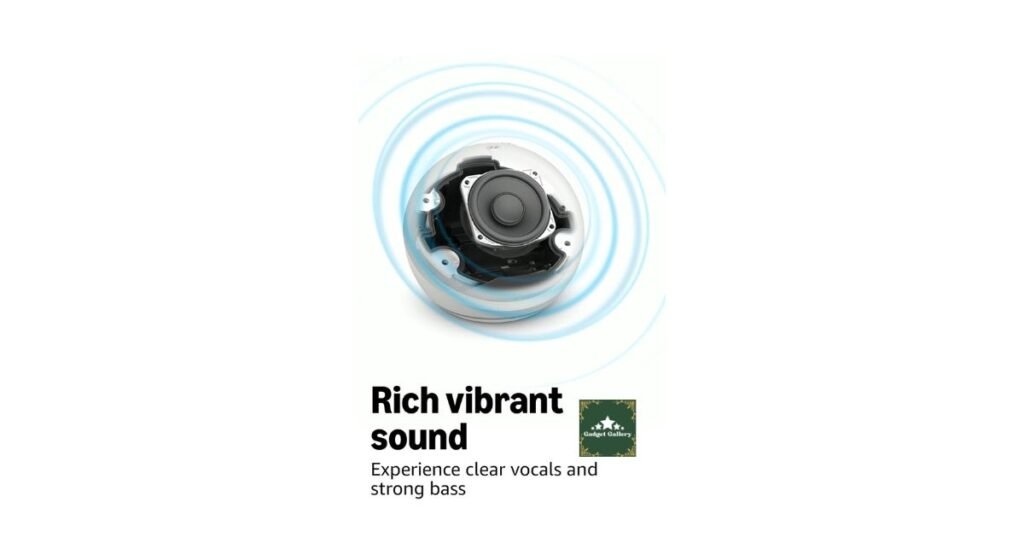
<cite index=”10-1″>Sound-wise, Amazon describes this as its best-sounding standard dot yet, with improved vocals and deeper bass compared to earlier generations. It’s not a room-shaking speaker, and it isn’t meant to be—it’s built for close-range, everyday listening in bedrooms, home offices, kitchens, and dining areas. </cite>
For a kitchen, this is exactly right. I don’t need concert-hall audio while I’m chopping vegetables. I need to hear the music I’m playing at comfortable volume while also being able to throw voice commands across a noisy kitchen and have them register. The Echo Dot handled both.
The dining room use case I didn’t expect: background music for dinner that doesn’t require anyone to pick up a phone. “Alexa, play something relaxing” just works. My wife has stopped complaining about dinner being silent. Small win, but a real one.
The Home Office
This is where the conversational Alexa+ made the biggest practical difference for me.
I use it for:
Schedule management—”Alexa, what do I have tomorrow afternoon?”—it reads from my linked calendar accurately. The old Alexa could do this, but the new version handles follow-ups like “move that to Friday” without me having to re-establish what meeting I’m talking about.
Quick research during calls—Muted on a Zoom call, I asked Alexa a specific statistic I needed. Got an accurate answer in seconds without disrupting the meeting flow. This is the kind of utility that sounds minor but happens multiple times a day once you start using it.
Ambient sound for focus—”Alexa, play brown noise”—has become my default deep-work trigger. Works every time without phone interaction.
The one problem I hit: I asked Alexa to draft a quick email message to send myself. It worked, but the integration with my email client was clunkier than I wanted. This is still an area where voice-to-action workflows need polish. Not a dealbreaker, but honest.
My Son’s Bedroom (Formerly My Office Echo Dot)
Eight-year-olds and smart speakers are a specific kind of chaos. Here’s what I observed over three weeks:
He uses it almost exclusively for three things: asking trivia questions, playing music while he does homework, and making Alexa “tell a joke.” It handles all three without issues. The parental controls via the Alexa app let me set a sleep mode that disables it at 9:30 PM, which solved the “Alexa keep playing music” bedtime avoidance strategy immediately.
The one thing I’d tell parents: check the explicit content filter in the Alexa app. It’s there, and it works, but it’s not on by default. Turn it on the day you set it up in a kid’s room.
Setup: What the First 15 Minutes Actually Look Like
Setup is legitimately simple, and I’ve set up enough smart home devices to know when “easy setup” is a lie.
The Echo Dot setup process:
- Plug it in—the orange ring spins immediately.
- Open the Alexa app on your phone
- Tap Devices → Add Device → Echo & Alexa → Follow the prompts
- It detects the Echo Dot automatically on your Wi-Fi
- Done—working within about 8 minutes
The app then walks you through optional steps: linking music services, setting your address for weather, and connecting a calendar. Do all of these. They take 5 more minutes and are what make the device genuinely useful versus just a speaker.
One setup mistake I made: I initially set it up before connecting my Google Calendar. Then I had to go back and add it through the Alexa app skill. This works fine but takes more steps after the fact—just connect your calendar during initial setup and save yourself the return trip.
The Sound Quality: Honest, Direct Assessment
I want to be specific here because “vibrant-sounding speaker” is marketing language, and you deserve actual information.
At bedroom listening distance (6-12 feet), the Echo Dot fills the room comfortably for background music and podcasts. Voices are clear. The bass is present—I was genuinely surprised by how non-tinny it sounds compared to the previous generation I tested.
At louder volumes (around 70%), music quality holds up without the distortion I’ve experienced on cheaper compact speakers. At maximum volume, there’s some compression on bass-heavy tracks. You’ll notice it if you’re listening critically. You won’t notice it if you’re having dinner or working.
For comparison, it sounds significantly better than a phone speaker at the same price. It sounds worse than a dedicated Bluetooth speaker in the $60-80 range. It sounds about the same as a Sonos Era 100, but the Sonos costs four times more and doesn’t have Alexa+ built in.
The charcoal colorway, practically speaking, disappears into most environments. Dark furniture, dark walls, and white walls with shadows—it blends into everything. There are lighter color options if you want it to be more visible, but I specifically wanted it to not be a focal point in my kitchen.
Alexa+ vs. Old Alexa: Three Specific Conversations That Showed the Difference
Rather than describe the difference abstractly, here are three real interactions that illustrated it:
Conversation 1 (Meal planning): Me: “Alexa, what should I make for dinner tonight?” Alexa: Asked what proteins I had available, suggested three options. Me: “What about the chicken one—how long does it take?” Alexa: Gave prep and cook time for the specific chicken dish it had just suggested.
Old Alexa would have responded to the second question as if the first conversation hadn’t happened. New Alexa maintained context.
Conversation 2 (Research): Me: “Alexa, who wrote Dune?” Alexa: “Frank Herbert.” Me: “When did he die?” Alexa: “Frank Herbert died in 1986.”
That second response connected “he” to “Frank Herbert” without me repeating the name. Trivial example—but this happens dozens of times a day across different conversations and makes the device feel like it’s actually listening rather than pattern-matching.
Conversation 3 (The dinosaur one I started with): My son: “Alexa, what did dinosaurs smell like?” Alexa: Gave a genuinely informative answer about paleontological inference. My son: “Were they worse than a skunk?” Alexa: Made a comparison that was actually funny and age-appropriate.
That multi-turn conversation with context-awareness and some personality was not something the previous Echo Dot could do. It made the device feel like something worth talking to rather than something worth yelling commands at.
Mistakes I Made—Learn From Mine
Mistake 1: Putting it too close to the kitchen vent. The Echo Dot’s microphone picked up the ambient vent noise and had trouble hearing me when I was on the other side of the kitchen. Moved it 18 inches away from the vent—problem completely solved. Placement matters more than you’d think.
Mistake 2: Not setting up routines from day one. Routines are the most underused feature on Echo devices. I spent the first two weeks just using voice commands one at a time. Then I set up a morning routine—alarm, weather briefing, calendar summary, and a reminder to check my task list—and it genuinely changed how I start my day. Set routines up during initial setup, not weeks later.
Mistake 3: Forgetting to check the “Do Not Disturb” schedule. The Echo Dot in the bedroom picked up our conversation at 11 PM one night and tried to respond. I hadn’t set a Do Not Disturb schedule. Five minutes in the app fixed this. Set it up the same day you put it in a bedroom.
Mistake 4: Assuming it couldn’t do things without asking. For the first month I kept using my phone for things I could have asked Alexa. Shopping lists, reminders, timers across multiple rooms, and intercoms between devices—all work and are often faster than phone interaction once you’re comfortable using voice naturally. The learning curve is mostly psychological, not technical.
Who Should Buy This Echo Dot
Buy it without hesitation if you:
Are you a Prime member who doesn’t have an Echo device yet? You’re already paying for Alexa+, you’re just not using it. This is the lowest-cost way to start.
Have a bedroom or home office that needs ambient sound and smart assistant capability without a large speaker footprint. The compact design and adequate sound quality make it perfect for these spaces.
Are you buying for a parent or grandparent who wants voice-controlled music, reminders, and an easy way to make calls without navigating a phone? The setup is simple enough to do for them, and once set up, voice commands remove most phone complexity.
Have kids who need a bedroom device for music, timers (homework!), alarms, and the occasional trivia rabbit hole. The parental controls are functional, and the content filtering works when you turn it on.
Skip it if you:
Want serious audio quality as the primary use case—get a dedicated Bluetooth speaker instead. The Echo Dot is a capable utility speaker, not an audiophile one.
Are deeply embedded in the Google ecosystem—Google Assistant integration with Google Calendar, Docs, and Google Home is more seamless on Google Nest devices. The Alexa app links Google Calendar but doesn’t integrate as deeply as native Google hardware.
You already own an Echo Dot (5th Gen) that’s working fine—the upgrade is meaningful but not urgent if your current device does what you need.
Want a display alongside the speaker? The Echo Show 5 adds a screen for not much more money and is better for kitchens where you want to see recipes, timers, and video calls.
Pros and Cons
Pros
Alexa+ conversational AI is a genuine leap forward—multi-turn conversations with context retention make this feel fundamentally different from previous generations.
Sound quality for the size is impressive—particularly for bedroom and office distances, where the bass improvement over previous generations is clearly audible.
Setup takes less than 15 minutes—a straightforward process even for non-technical users.
Included free with Prime—Alexa+ access at no additional subscription cost is significant value for existing Prime members.
The compact charcoal design disappears into any room—it doesn’t demand visual attention or clash with decor.
Excellent as a multi-room audio node—it pairs easily with other Echo devices for whole-home audio without the complexity of a traditional audio system.
The routine system is genuinely powerful—once configured, it automates morning briefings, commute reminders, and bedtime sequences.
Parental controls are functional—content filtering and Do Not Disturb scheduling work reliably for household families.
Cons
Not for serious music listening—at higher volumes, bass-heavy tracks show compression that audiophiles or dedicated speaker users will notice.
Email and productivity app integration needs polish—the vision of voice-controlled email drafting works, but execution is clunkier than phone-based alternatives.
Alexa+ requires a Prime or paid subscription—the most impressive features need an active Prime membership or Alexa+ Standard plan; the device is significantly less capable without it.
Requires Wi-Fi to function—not a portable speaker; useless without an internet connection
No display—for use cases where seeing timers, recipes, or caller ID matters, the Echo Show lineup is more appropriate.
Privacy concern awareness is required—the device is always listening for the wake word; users with strong privacy concerns should understand this and review Amazon’s data practices.
FAQs
Q: Do I need a Prime membership to use the Echo Dot fully? A: The device works without Prime, but the most capable version of Alexa+—the conversational AI that makes this generation genuinely different—requires either an active Prime membership or an Alexa+ Standard subscription. Basic functions like timers, music playback, and smart home control work without Prime. The full conversational AI experience requires a subscription.
Q: What’s the difference between the Echo Dot and Echo Dot Max? A: The Echo Dot Max is the larger, more powerful version built for living rooms and medium-sized spaces. <cite index=”5-1″>The Echo Dot Max delivers nearly three times the bass of the standard Echo Dot and is designed for room-filling sound. </cite> The standard Echo Dot is optimized for bedrooms, dining rooms, and offices—smaller spaces where a compact speaker is more appropriate than a full-room unit.
Q: Can the Echo Dot control smart home devices? A: Yes. It acts as a voice controller for compatible smart home devices, including smart lights, thermostats, plugs, and locks. The compatibility list covers thousands of devices, including Philips Hue, Ring, Nest, and many others. Setup for each device happens through the Alexa app.
Q: How does charcoal compare to other available colors? A: <cite index=”10-1″>The charcoal colorway is the understated, dark-gray option that tends to blend into most home decor, which is likely why it remains one of the most popular finishes in the lineup. </cite> Other colors (Cloud White, Glacier White) are available if you want the device to stand out or match lighter interiors.
Q: Is the Echo Dot always listening? A: The device listens locally for the wake word (“Alexa”) only. Audio is only transmitted to Amazon’s servers after the wake word is detected. A physical microphone mute button on the device disables the microphones completely when pressed, which activates a red light indicator. Amazon publishes its privacy policy and data practices in full if you want to review what data is stored.
Q: Can I use Spotify or Apple Music instead of Amazon Music? A: Yes. Spotify, Apple Music, Tidal, iHeartRadio, and several other services link through the Alexa app. You can set a non-Amazon service as your default music provider. “Alexa, play [song] on Spotify” works after your Spotify account is linked.
Q: What happens if my internet goes down? A: Almost nothing works. The Echo Dot requires internet connectivity for nearly all functions except the Bluetooth speaker mode (if you have a device paired). Smart home controls, music streaming, and Alexa responses all need Wi-Fi.
Q: Is there a kids’ version of the Echo Dot? A: <cite index=”11-1″>Parents can make Alexa kid-friendly by creating a profile for their child and enabling free parental controls from Amazon Kids. </cite> There’s also an Echo Dot Kids version with a dedicated kids’ experience and Amazon Kids+ content subscription. The standard Echo Dot with parental controls enabled is what I use in my son’s room, and it works well.
Final Thoughts
Six weeks with the Amazon Echo Dot (newest model) has produced a clear answer to the question I started with: is this actually different from the Echo devices I’ve tried and returned before?
For me, yes—and the reason is entirely Alexa+.
The hardware improvement (better sound, deeper bass) is real and noticeable. But what makes this device a different object than previous Echo Dots is the conversational AI that can actually maintain context, answer follow-up questions, and handle the kind of natural rambling conversation an eight-year-old throws at it about dinosaur smells.
If you have Prime and don’t own an Echo device, there’s no reason not to have one of these in your bedroom or office. The value proposition at the current price, with Alexa+ included in your existing Prime subscription, is genuinely strong.
If you already have a recent Echo Dot that works fine, the upgrade is meaningful but not urgent.
If you’re new to smart speakers entirely and wondering whether they actually change anything in daily life—one conversation about paleontology at dinnertime was enough to convince my household they do.
🛒 Where to Buy
Check Current Amazon Echo Dot Price on Amazon →
Related Reviews Worth Reading
- Apple Watch Series 11 Review—9 Months of Daily Wear—Wearable smart companion to pair with your Echo setup
- WHOOP 5.0 MG Activity Tracker Review — Deep health tracking to complement Alexa’s wellness routines
- TP-Link BE6500 WiFi 7 Router Review—The network your Echo devices run on matters more than most people realize
- TOZO W1 Max Wireless Charger Review—Clean up your smart home desk setup
- Roku Streaming Stick HD Review—Pair with your Echo for a complete smart entertainment setup
👉 Subscribe to @5stargadgetgallery on YouTube—New smart home and gadget reviews every week. Hit the notification bell so you never miss one!
🌐 Start Your Own Smart Home Review Blog
This site runs on Hostinger—the fastest and most beginner-friendly hosting platform I’ve used for running a content review site.
Why Hostinger works for review blogs:
- Plans start at just $2.99/month.
- Free domain included for the first year
- One-click WordPress installation—no technical skills needed
- Fast global servers for better Google search rankings
- 24/7 live chat support in plain English
Launch your smart home review blog with Hostinger
Disclosure: This article contains Amazon Associates affiliate links. As an Amazon Associate, I earn from qualifying purchases at no additional cost to you. The Amazon Echo Dot (newest model) in Charcoal was personally purchased and used for six weeks across three rooms prior to writing this review. All observations and opinions are entirely my own.