
There is a specific kind of open-plan office misery that every remote-to-office worker knows.
You come back from working at home—where you controlled every sound in your environment—and you sit down at a shared desk next to someone who types like they’re personally angry at their keyboard. Not clicking mechanical switches, which at least have a certain rhythm. The irregular, percussive violence of someone who learned to type in the pre-tactile-feedback era and never unlearned it.
By week two of the office return policy at my job, I had developed a stress response to the sound of a keyboard from across the room.
I needed headphones with noise cancellation. I had a $40 budget. Everyone I asked pointed me toward the Sony WH-1000XM5 at $280 or the AirPods Max at $450, which was not helpful advice given my actual budget.
Then a colleague sitting three desks away held up his headphones and said, “These are forty dollars, and they block everything.” He was wearing Soundcore Q20i headphones by Anker.
Six months, several flights, countless office sessions, and one unexpectedly awful layover in Dallas later—here’s the complete honest review.
What Hybrid ANC Actually Means (And Why It Matters)
Before I talk about experience, I want to explain one thing clearly because “hybrid ANC” sounds like marketing language but actually describes something specific.
Standard ANC (feedforward): Microphones on the outside of the ear cup capture ambient noise and generate an opposing sound wave to cancel it. Good at handling predictable, steady-state noise.
Hybrid ANC: Microphones on both the outside AND the inside of the ear cup. The external mics handle incoming ambient noise. The internal mics monitor what’s actually reaching your ear inside the cup and make corrections. The result is more accurate cancellation across a wider range of frequencies.
At $40, hybrid ANC is rare. Most headphones at this price use single-point feedforward or basic passive isolation. The Soundcore Q20i using hybrid ANC is what makes it interesting at this price point—it’s using a more sophisticated technical approach than the price suggests.
Whether that technical approach delivers real results in daily use is what six months of testing answered.
First Week: Setting Up and Initial Impressions
The Q20i arrives with the headphones, a USB-A charging cable (not USB-C — I’ll come back to this), a 3.5mm aux cable for wired use, and a carrying pouch.
Pairing: Hold the power button for 3 seconds, open Bluetooth settings on your phone or laptop, and select “Soundcore Q20i. ” Paired in about 45 seconds. Auto-reconnects to the last paired device when powered on. In six months, reconnection has failed exactly twice—both times fixed by turning the headphones off and on again.
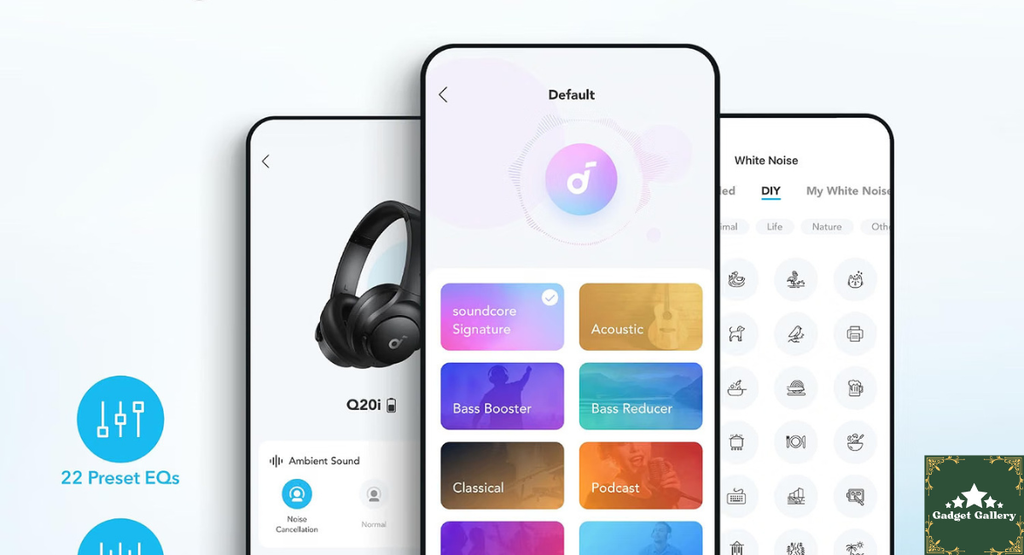
Soundcore App: Optional but worth installing. Available on iOS and Android. Through the app you can access a custom EQ, toggle between ANC modes, and configure the touch controls on the ear cups.
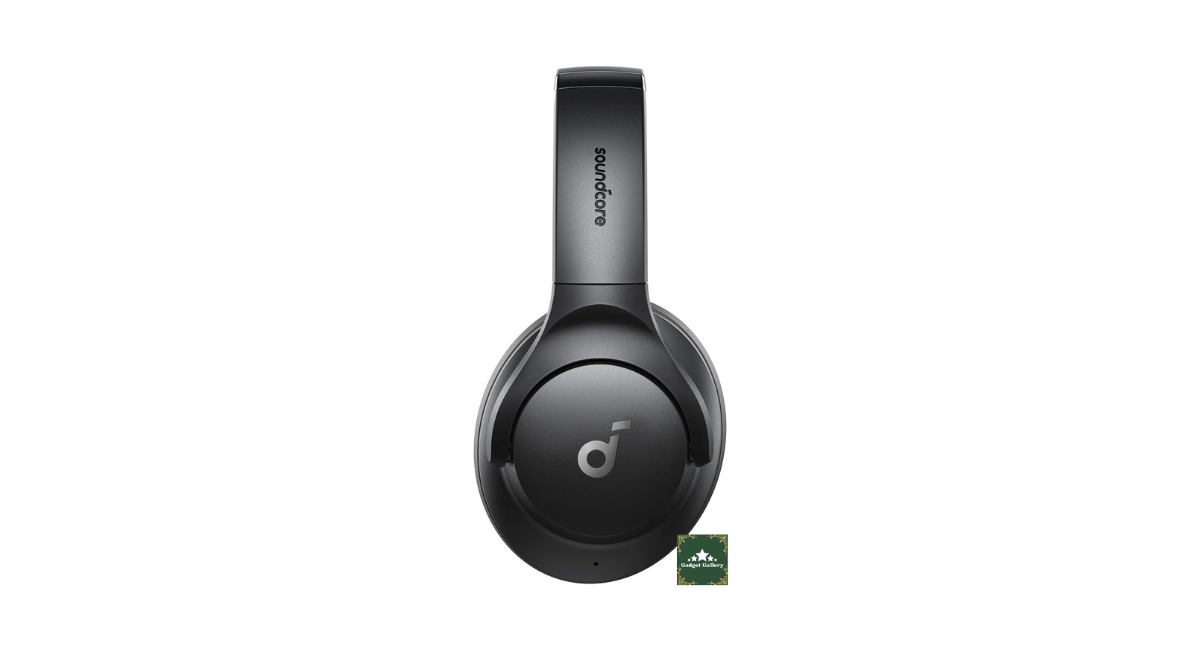
First impression wearing them: The over-ear cushions are soft foam that seals around rather than pressing on the ear. Initial comfort is good. The headband is well-padded. The clamping force is noticeable but not tight—present without being uncomfortable.
First ANC test: Sat in my office. Turned ANC on. The colleague’s keyboard disappeared. Not reduced—genuinely gone. The first time I heard the silence that good ANC creates in a noisy environment is still one of the more satisfying consumer electronics moments I can recall.
Six Months Across Five Different Environments
Real testing means real environments. Here’s what I found in each.
Environment 1: Open-Plan Office (The Reason I Bought These)
The keyboard that provoked this purchase: handled completely. Within the first week I had verified this, and it remained true throughout. The ANC on the Q20i manages keyboard noise, phone conversations from neighboring desks, HVAC noise, and the general office ambient hum with consistent effectiveness.
One honest limitation: sudden nearby conversation—someone who walks directly up to my desk and starts talking—passes through the ANC partially. This is appropriate behavior (you want to hear people addressing you directly) but worth knowing if you expected complete human voice elimination.
Time I wore them daily at the office: 4-6 hours. Comfort over this duration: good for the first 3 hours, slightly warm around the ear cushions after hour 4, and minor pressure awareness by hour 5-6. Not painful—just present. For 3-4 hour focused sessions, zero issues.
Environment 2: Commuting (Train and Bus)
Train engine and wheel noise are exactly the type of consistent low-frequency sound that ANC systems handle best. The Q20i reduced train noise to a low background hum that the music I was playing comfortably covered.
Bus engine noise: similarly handled. Bus interior conversation: reduced to background level without complete elimination.
The 40-hour battery claim means I never once worried about battery during a commute across six months. I charged the Q20i approximately once per week during this testing period.
Environment 3: Two Flights (One Long-Haul)
The Dallas layover I mentioned in the introduction was a five-hour delay in a busy terminal. I put the Q20i on with ANC active and worked on my laptop for four hours. I was aware of people around me in a general sense but not distracted by specific conversations or announcements.
The long-haul flight (7 hours) was where the Q20i showed both its best quality and its most significant limitation.
Best quality: Airplane cabin engine drone is the ideal ANC target—consistent, predictable, mid-low frequency noise. The Q20i eliminated most of it, turning a fatiguing roar into a soft background presence. This alone makes long-haul travel dramatically more comfortable.
Significant limitation: Seven hours of wearing over-ear headphones is a long time regardless of the headphones. By hour five, my ears were warm, the cushions had compressed, and the clamping force was more noticeable. I took breaks every 90 minutes or so, and this helped. For ultra-long flights, premium headphones with more ventilation and better clamping pressure management (Sony XM5, Bose QC45) are more comfortable. At $40, this is an expected trade-off.
Environment 4: Working From Home
At my home desk with the door closed, the Q20i is slightly overkill for pure noise management—my home office is already quiet. But I use them here for music listening and call privacy.
The built-in microphone handles calls adequately. Call quality feedback from colleagues: consistently described as clear. Not studio-quality, not impressive, but functional for professional calls. Zoom and Teams calls on these headphones have never prompted a quality complaint from the other end.
Environment 5: Gym
I tried the Q20i at the gym for three weeks. The results were educational.
What I discovered: Over-ear headphones and exercise are a poor match for me personally. The ear cups trap heat during physical exertion, and the headband shifts during high-movement exercises like jumping and rowing.
The Q20i is not designed for exercise. It has no sweat resistance rating. This was my mistake in testing and not the product’s failure—it performs exactly as an over-ear headphone should perform, which is to say, not ideally during vigorous physical activity.
For gym use, in-ear options with sport design are the appropriate tool. I switched back to sport earbuds for gym sessions and kept the Q20i for desk and travel use where it belongs.
Sound Quality: Honest Assessment
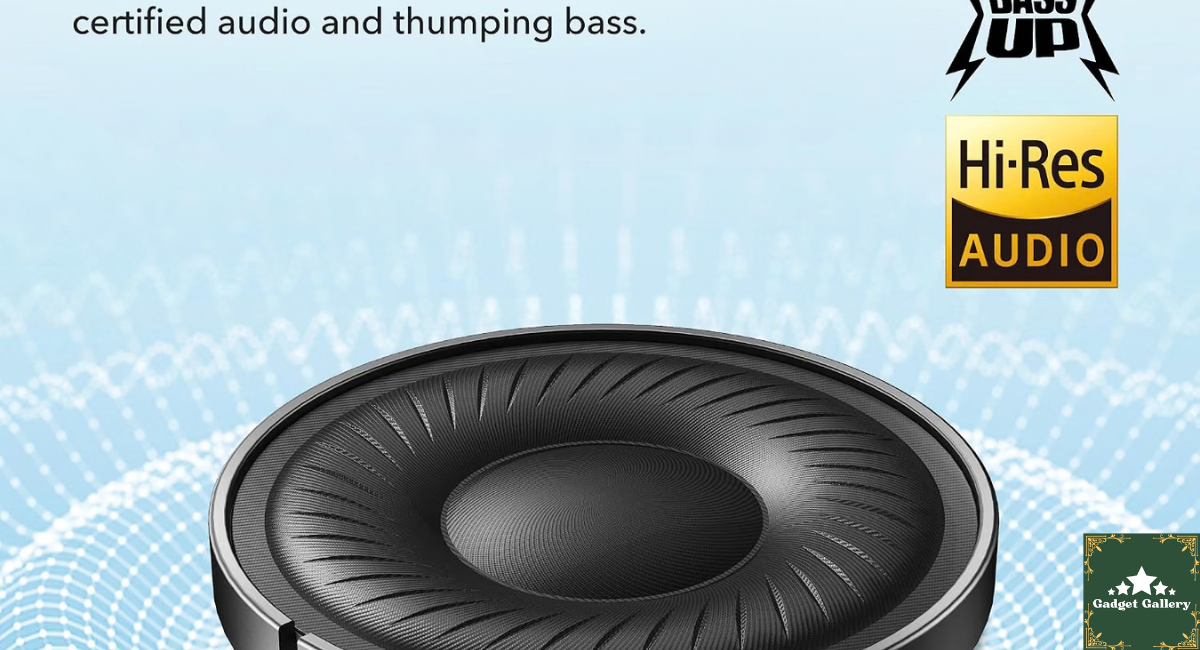
The Soundcore Q20i’s audio profile is warm and bass-forward. This is a deliberate tuning choice that suits popular music genres and makes listening on portable hardware feel more impactful than neutral-tuned headphones.
Bass: Present, energetic, and occasionally dominant. For hip-hop, EDM, pop, and contemporary R&B, the bass punch is genuinely enjoyable. For classical, jazz, or acoustic music where bass accuracy matters more than bass energy, the emphasis can feel slightly overcooked.
Midrange: Clear enough for voice content and present for instrumental midrange frequencies. Not as forward as balanced-tuned headphones but not lost behind the bass either.
Treble: Smooth without harshness. The Q20i doesn’t produce fatiguing treble peaks, which contributes to comfortable long-session listening.
Soundstage: Moderate. Better than earbuds, not as expansive as high-quality open-back headphones. For music and podcast listening on portable hardware, the soundstage is appropriate.
Via the Soundcore app EQ: The custom EQ in the app allows adjusting the sound profile to personal preference. Reducing the bass slightly and lifting the mids produces a more balanced sound signature for users who find the default too bass-heavy. This customization is available for free through the app and significantly affects the listening experience.
ANC Quality Compared to What You Might Expect
I want to be direct about this because marketing language around budget ANC is often inflated.
The Q20i ANC is genuinely good for this price range. Consistent low-frequency noise—HVAC, traffic, airplane engines, train noise—is effectively handled. Office ambient noise is substantially reduced. It does what it says.
The Q20i ANC is not at the Sony WH-1000XM5 level. At $280, the XM5 produces deeper, more consistent ANC across a wider frequency range and adapts more intelligently to changing noise environments. If you’ve used flagship ANC headphones and that’s your baseline, the Q20i will feel like a step down.
If your baseline is no ANC or basic passive isolation, the Q20i will feel like a significant step up. That’s the honest calibration.
For the majority of buyers considering this product at this price, the relevant comparison is “this versus no ANC” rather than “this versus premium ANC. ” On that comparison, the Q20i delivers clearly and consistently.
The USB-A Charging Cable: The One Design Choice I Wish They Had Changed
I want to address this specifically because it comes up repeatedly in user reviews, and I experienced it too.
The Soundcore Q20i charges via USB-A, not USB-C.
In a world where my phone, laptop, keyboard, and most other devices I own charge via USB-C, having a device that requires a USB-A cable means keeping a specific cable accessible that I wouldn’t otherwise have. It’s a minor friction point but a daily one.
This is a meaningful enough inconvenience that I mention it every time someone asks me about these headphones in conversation. The audio and ANC performance are excellent for the price. The USB-A charging cable in 2026 feels like a compromise made at the time of design that hasn’t been updated.
If Anker updates the Q20i to USB-C charging, I’d buy a second pair immediately for travel. As-is, it’s a genuine minor annoyance that doesn’t affect audio or ANC performance but affects daily convenience.
Mistakes I Made—Learn From These
Mistake 1: Using them at the gym. Covered above—not a gym headphone, not rated for sweat, and ear cups trap heat during exercise. Use sport earbuds for gym sessions and keep the Q20i for desk, travel, and commute use.
Mistake 2: Not exploring the Soundcore app EQ early enough. I used the default sound profile for the first month. The bass-forward default is pleasant but not for everyone. When I finally opened the app and adjusted the EQ toward a flatter response, my music listening became noticeably more enjoyable for the content I actually listen to. Install the app on day one.
Mistake 3: Charging them with a slow USB-A charger. The included cable is USB-A. I initially plugged this into an old USB port on my monitor that provides low power output. Charging took forever. Plugging into a proper USB-A wall adapter or a high-output USB port charges them quickly. Check your power source, not just the cable.
Mistake 4: Leaving ANC on when I didn’t need it. ANC actively continuously drains battery faster than ANC-off listening. For my home office where I don’t need ANC, switching it off extended my weekly charge cycle noticeably. Use ANC when you need it; disable it when you don’t. The toggle is easy through the ear cup button or app.
Who Should Buy the Soundcore Q20i
Buy these without hesitation if you:
Are returning to an open-plan office after remote work and need noise cancellation to maintain focus. This is the exact scenario these headphones handle best.
Want ANC headphones under $50 and understand what you’re getting—effective budget ANC, good sound, and strong battery life, with trade-offs on premium comfort and charging port.
Travel regularly on trains, buses, or flights and want meaningful background noise reduction without paying premium prices.
Are you a student studying in shared spaces—libraries, cafes, common areas—where consistent ambient noise breaks concentration?
Want wireless over-ear headphones for work-from-home calls with adequate microphone quality and good passive isolation when ANC isn’t needed.
Are buying a first pair of ANC headphones and want to experience the technology before committing to a premium price.
Consider alternatives if you:
Do ultra-long flights regularly (8+ hours), and comfort for extended wear is the primary concern—premium headphones have better long-session comfort engineering.
Exercise with headphones—sport-specific earbuds serve this use case better in every way.
Prioritize USB-C charging for a unified cable ecosystem—the USB-A charging cable is a real daily inconvenience.
Are a serious audiophile who listens critically—the bass-forward tuning and budget driver quality won’t satisfy refined listening expectations.
Already own quality ANC headphones in the $100+ tier—the upgrade isn’t meaningful enough to justify replacement.
Pros and Cons
Pros
Hybrid ANC technology at this price is genuinely unusual—a more sophisticated approach than most $40 headphones use.
ANC effectiveness is real—consistent noise in offices, transit, and flights is meaningfully reduced in daily use.
40-hour battery life is exceptional—weekly charging is realistic with typical daily use patterns.
The Soundcore app EQ provides free customization that meaningfully improves the sound profile to personal preference.
Comfortable for sessions up to 3-4 hours—soft cushions and adequate headband padding for desk and travel use
Wired fallback via 3.5 mm—continues working even at zero battery with the included cable
Bluetooth auto-reconnect works consistently—connects to the last paired device reliably on power-on.
Strong value for the price—the combination of ANC, battery life, and sound quality at this cost has no equivalent I’ve found.
Cons
USB-A charging only—the single most consistently frustrating aspect of daily use in a USB-C world
Not suitable for exercise—no sweat resistance, ear cups trap heat during physical exertion
ANC is a budget tier—genuinely effective for the price, not comparable to $200+ flagship ANC systems.
Ear warmth during extended wear—cushions don’t breathe well; 4+ hour sessions cause warmth accumulation.
Bass-forward default tuning isn’t for everyone—it requires app EQ adjustment for balanced listeners.
Microphone quality is functional, not impressive—adequate for calls, not suitable for recording or streaming.
FAQs
Q: Is the ANC strong enough for open-plan offices with loud keyboards? A: Yes—this was my primary test environment for six months. The Q20i consistently handled keyboard noise, colleague conversations, and HVAC effectively. It was the reason I bought these, and the performance held up throughout.
Q: Can I use these for flights? A: Yes, and airplane engine noise is one of the strongest ANC use cases for these headphones. For flights under 5 hours, comfort is not an issue. For very long flights (8+ hours), taking periodic breaks from wearing them is recommended.
Q: Do they work in wired mode when the battery is dead? A: Yes. The included 3.5 mm aux cable allows wired connection regardless of battery state. In wired mode, ANC is not active, but audio playback works normally.
Q: How does the microphone sound for video calls? A: Consistently described as clear by call recipients across Zoom, Teams, and phone calls. Not impressive or notable—functionally adequate. For professional calls and meetings, it works without causing quality complaints.
Q: Does the Soundcore app work on both iPhone and Android? A: Yes. The Soundcore app is available on both iOS and Android and provides the same EQ and ANC mode controls on both platforms.
Q: How long does charging take from dead to full? A: Approximately 2-3 hours from fully depleted using a proper USB- A wall adapter providing adequate current. Using a low-output USB port increases charge time significantly.
Q: Are these comfortable for people who wear glasses? A: The cushion seal is soft enough that most glasses frames don’t cause discomfort during moderate sessions. For longer wear, some glasses wearers report pressure where the arm of the frame passes under the cushion. This varies by glasses design.
Final Thoughts
Six months after buying these headphones to survive an office return, the Soundcore Q20i is still the first thing I pack for any trip that involves a flight or a train. It’s still the headphones I reach for at the office when focus is the priority. It’s still on my desk when I want music that fills the room instead of earbuds that fill the ear.
The USB-A cable remains annoying. I’ve complained about it every time I’ve had to find a compatible charger. I will complain about it the next time too.
Everything else has held up. The ANC continues working the way it did in week one. The battery lasts the week. The sound is pleasant for daily listening. The ear cups show no degradation in cushion quality.
For $40, the Soundcore Q20i delivers a version of the premium ANC headphone experience that most people realistically experience as adequately close to the real thing in their actual daily life. Not identical—but close enough that the $200-240 gap between these and flagship options becomes very hard to justify unless the specific advantages of premium systems directly address your specific use case.
If they don’t—and for most people they don’t—the Q20i is the honest answer to the question of what the right budget ANC headphone looks like.
Where to Buy
🛒 Check Current Soundcore Q20i Price on Amazon →
Related Reviews Worth Reading
- Soundcore P30i by Anker Earbuds Review—In-ear ANC alternative from the same brand
- Sony MDR-ZX110 Wired Headphones Review—Budget wired alternative with different trade-offs
- Apple EarPods USB-C Review — Simple wired option for iPhone users
- Mini Mic Pro Wireless Microphone Review—Pair with your headphones for better recording quality
- Amazon Basics PC Speakers Review—Complete your home office audio setup
👉 Subscribe to @5stargadgetgallery on YouTube—weekly headphone reviews and honest audio gear tests. Subscribe and hit the notification bell!
🌐 Start Your Own Audio Tech Review Blog
This site runs on Hostinger—the platform I’ve used from the start because it genuinely makes running a review site manageable without a technical background.
- Plans start at $2.99/month
- Free domain for year one
- One-click WordPress installation
- Fast servers that handle review-heavy content
- 24/7 live support
Start your headphone review blog with Hostinger.
Disclosure: This article contains Amazon Associates affiliate links. As an Amazon Associate, I earn from qualifying purchases at no additional cost to you. The Soundcore Q20i was personally purchased and used for six months across offices, commutes, flights, and home settings before writing this review. All findings are entirely my own.